
An AI that researches the product first makes far more accurate video ads
Researchers at the University of Central Florida trained a small AI to look up a product's facts and photos before planning each shot. Its video ads showed the right product, with the right claims, far more often.
The short version
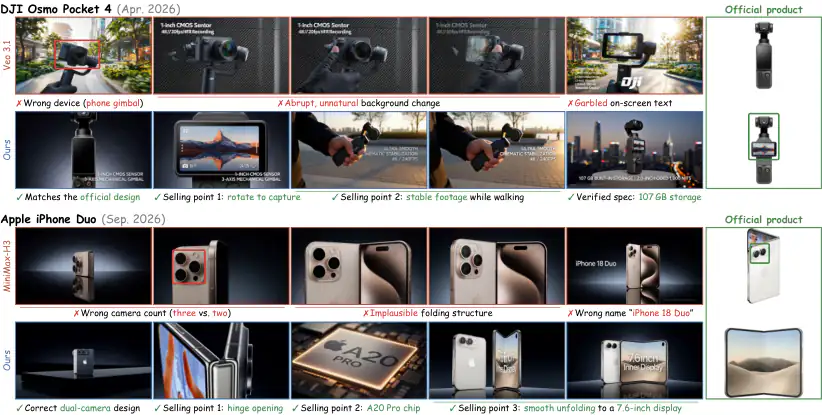
- Ask an AI video tool for an ad and it often shows the wrong product, the wrong specifications or garbled text. Researchers at the University of Central Florida tested this on 305 ad briefs.
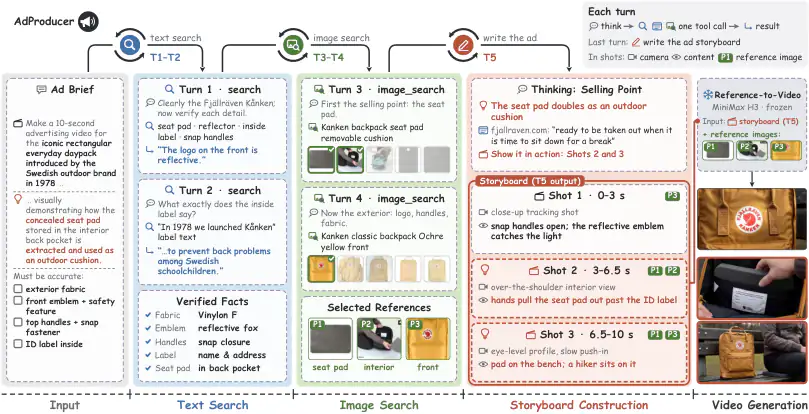
- Their system, AdProducer, first searches the web for the product's facts and official photos. It then writes a shot-by-shot plan for the video tool to follow.
- Using the same video tool, its score for showing the product correctly rose from 17.3 to 51.3. A small group of viewers also rated its ads more persuasive.
What the researchers built
AI video tools have become very good at making pretty pictures. They are much worse at knowing what a real product looks like, especially one launched recently.
The researchers give an example. Asked for an ad for a new foldable phone, one video tool showed three cameras instead of two and got the name wrong. Asked for a small camera, another showed the wrong device and garbled the text on screen.
AdProducer adds a step before the video is made. A small, freely available AI model reads the brief and runs web and image searches. It checks the product's facts and picks official photos. Then it writes a storyboard: what each shot shows, how long it lasts, how the camera moves and what text appears. Only that plan and the chosen photos go to the video tool.
The team trained this planner on 3,710 worked examples, then refined it with feedback on both the plan and the finished video. The video tool itself was not changed, so the same approach can work with other video tools.
The results
On the team's test, which scores product accuracy, the video tool scored 17.3 on its own. With AdProducer's plan, it scored 51.3. Google's Veo tool also improved, from 28.0 to 35.9, with no changes to Veo itself.
A separate AI judge scored how well each video worked as an ad, out of 10. AdProducer's ads averaged 4.70, against 2.72 for the same video tool without it.
In a small study, 15 people rated the videos without knowing which system made them. AdProducer's ads scored highest on product accuracy, on how informative they were and on whether viewers wanted to buy. The researchers also found that their trained small planner beat larger AI models that had not been trained for the job.
There are limits. These are 10-second clips without sound, judged mostly by other AI models. Grabbing viewers' attention in the first second was still a weak spot.
What it means for brands in Indonesia
If you sell online in Indonesia, you need a steady flow of short product videos for marketplaces and social media. AI video tools promise to make them cheaper. This research shows where they fail: the product itself.
The lesson is that the facts matter as much as the video tool. An AI that knows the real specifications, and has the official photos, makes ads that are both more accurate and more convincing. A wrong claim in an ad can also land a brand in trouble with consumer rules.
What to do
- Keep a fact sheet and a set of official photos for every product, ready to feed to any AI tool.
- Ask your agency or in-house team how their AI video process checks product facts before a shot is made.
- Have a person review every on-screen claim and price before an AI-made ad goes live.
- Take extra care with new launches, since AI tools know least about the newest products.
- Test AI-made ads against your usual ones on accuracy and sales, not only on cost.