
Claude can now read US bank accounts and explain where the money went
Anthropic has launched a read-only money assistant for US users that connects to bank and card accounts. It is also asking banks and wealth managers to help shape what comes next.
The short version
- Anthropic's Claude can now connect to a person's bank and card accounts in the US and answer money questions in plain language.
- Access is read-only. Claude cannot move money, and it does not sell loans or cards of its own.
- Anthropic calls this a first step. It wants banks and wealth managers to help build the next one.
What Anthropic launched
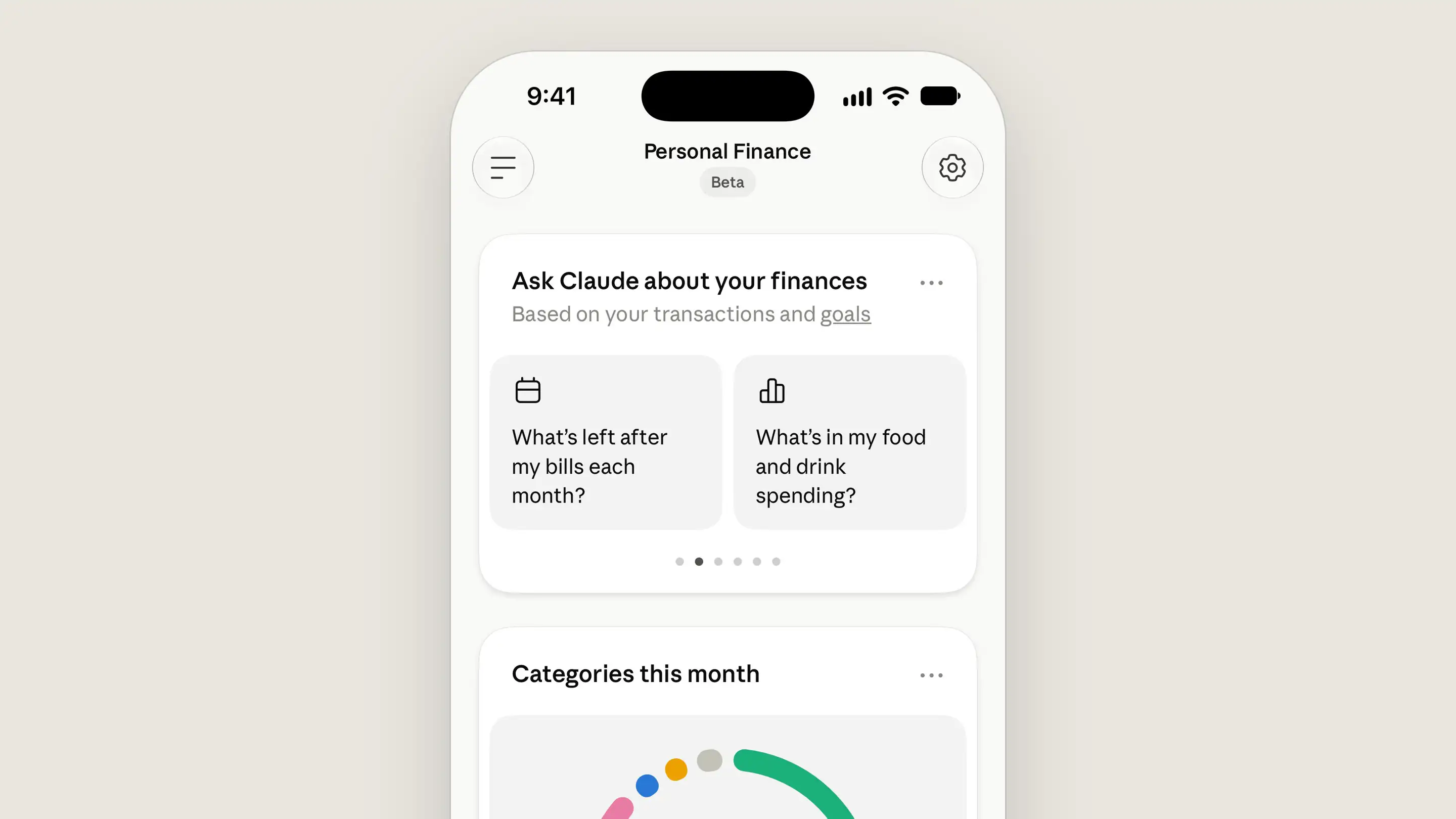
The feature is called Personal Finance. It started rolling out this week as a test version for Claude's paid plans in the US.
A user connects an account through Plaid, a service that links apps to banks. The user signs in to their bank there. Claude never sees the bank password.
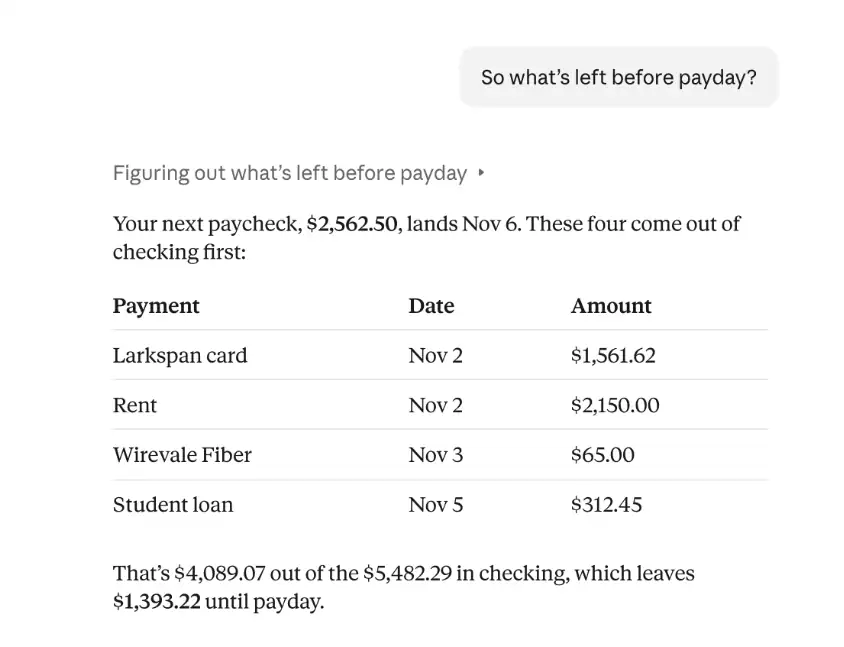
Then the user can just ask. Anthropic's example is a person late in the month asking where their money went. Claude adds up spending across all linked accounts and sorts it by category. It also compares the total with earlier months. It then lists the bills still due before payday and what will be left.
It can also spot things that are easy to miss. Think of a charge that hit twice, or a bill that has crept up all year. It can explain terms like an interest rate, then work out what it cost the user this year.
Users can also ask for a weekly spending chart or a calendar of bills due. Claude builds one, and the user can keep adjusting it. To start, Anthropic suggests linking one account and asking a single question, such as whether a spring trip is affordable.
The limits Anthropic set
Claude sees the balances and credit limits of each linked account. It also sees up to two years of transactions. It cannot move money or invest it.
Anthropic says the feature is not built to give investment advice. It also warns that Claude can make mistakes. It tells users to ask which transactions sit behind a number and to check important figures with their bank.
Chats inside the Personal Finance section are not used to train Anthropic's models. Users can unlink an account at any time.
Anthropic also stresses what it does not do. There are no ads or paid placements. It does not sell its own loans or credit cards. Anthropic says this keeps the answers straight, with no sales pitch behind them.
What it means for banks in Indonesia
This is a US launch. Nothing here is available in Indonesia yet.
Still, if you run a bank, the direction matters. Your customers may start asking a general AI assistant about their money instead of opening your app. If that happens, you lose the conversation, even though you hold the data.
Anthropic's next step makes this sharper. It says big money decisions are best made with licensed professionals and regulated firms. It is inviting banks and wealth managers to help shape that. In practice, banks could offer their services inside Claude.
The design also shows what customers may come to expect. Answers come in plain language. Access is read-only, and unlinking takes one step.
That leaves you two choices. You can build answers this good into your own app. Or you can decide on what terms you would share customer data with an outside assistant.
What to do next
- Ask a few customers what money questions they cannot answer in your app today.
- Test whether your own app could explain a month's spending in plain language.
- Decide your rules for sharing data with outside AI assistants: read-only, customer consent, easy unlinking.
- Check those rules against Indonesia's personal data protection law before any pilot.