
Criminals now use AI to find and attack website flaws with no human help
Google's threat researchers found an attack tool that studies new software fixes, then breaks in on its own. The time you have to apply a security update is shrinking.
The short version
- Google's threat researchers found, for the first time, criminals using AI to find and attack software flaws with no person involved.
- The tool compares a program before and after a security fix to find the weakness, then attacks it on its own.
- Attackers are also stealing companies' AI accounts and reselling them. Some victims faced fraudulent bills of more than $100,000 in a single day.
What Google found
Google's Threat Intelligence Group publishes a regular report on how attackers use AI. Its November update describes the first attacks run start to finish by AI.
The researchers found an exposed server running an attack system. It watches popular website software. When a security fix comes out, it compares the code before and after the fix. That tells it where the weakness was. It then writes code to break in and runs it against real websites, with no human stepping in.
The server also held stolen data and scripts for the next steps of a break-in, such as planting back doors. Records on it suggest the operator was aiming at French media and education websites.
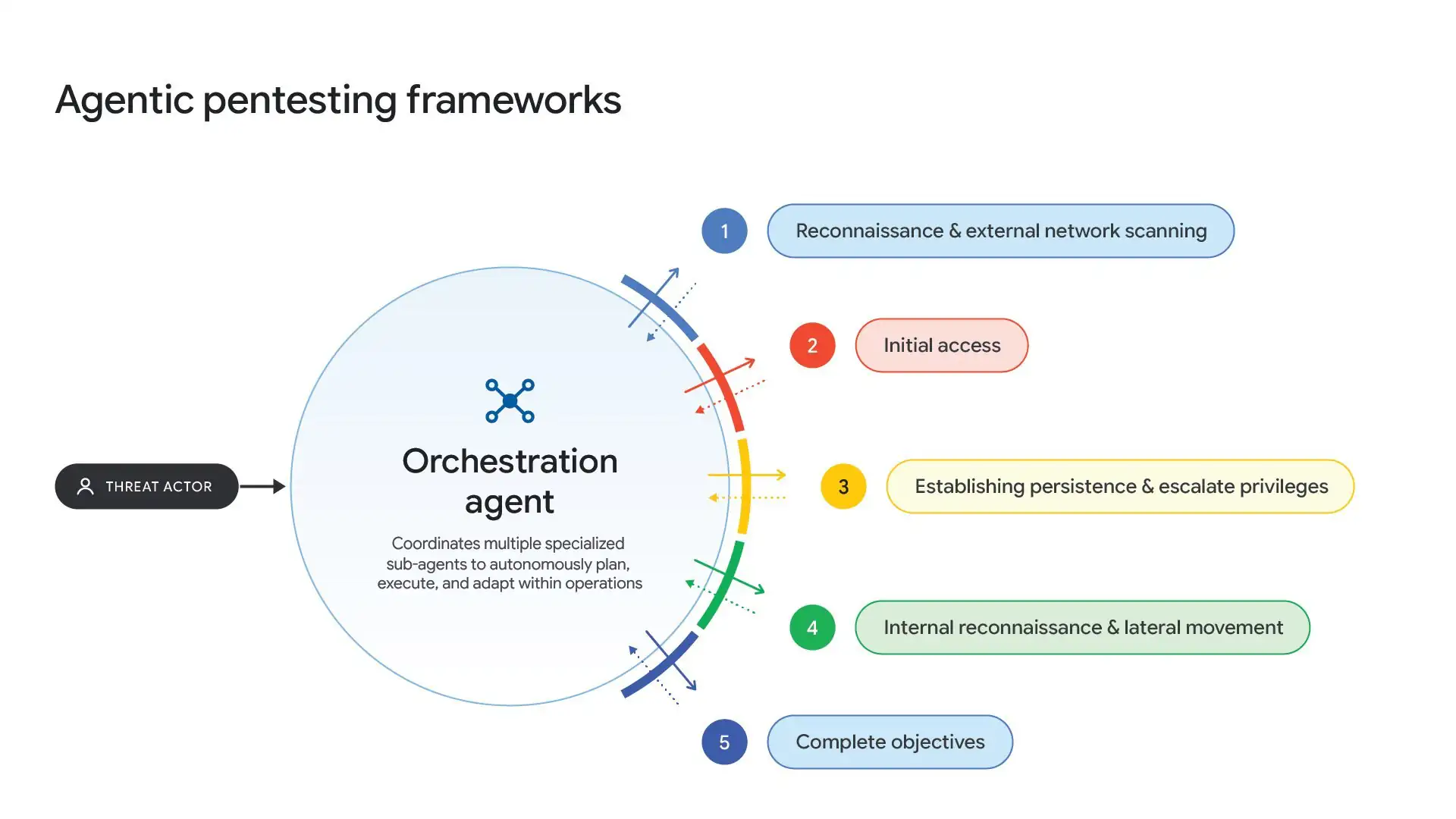
Other criminals are using free, publicly shared attack kits. These coordinate several AI helpers that break into a network and move around inside it. Google says one group used such a kit to scan a wide range of organizations in Asia between late August and early October 2026.
What is new this quarter
Earlier reports described AI helping attackers with parts of the job. This is the first time Google has seen the whole chain run without a person in the loop.
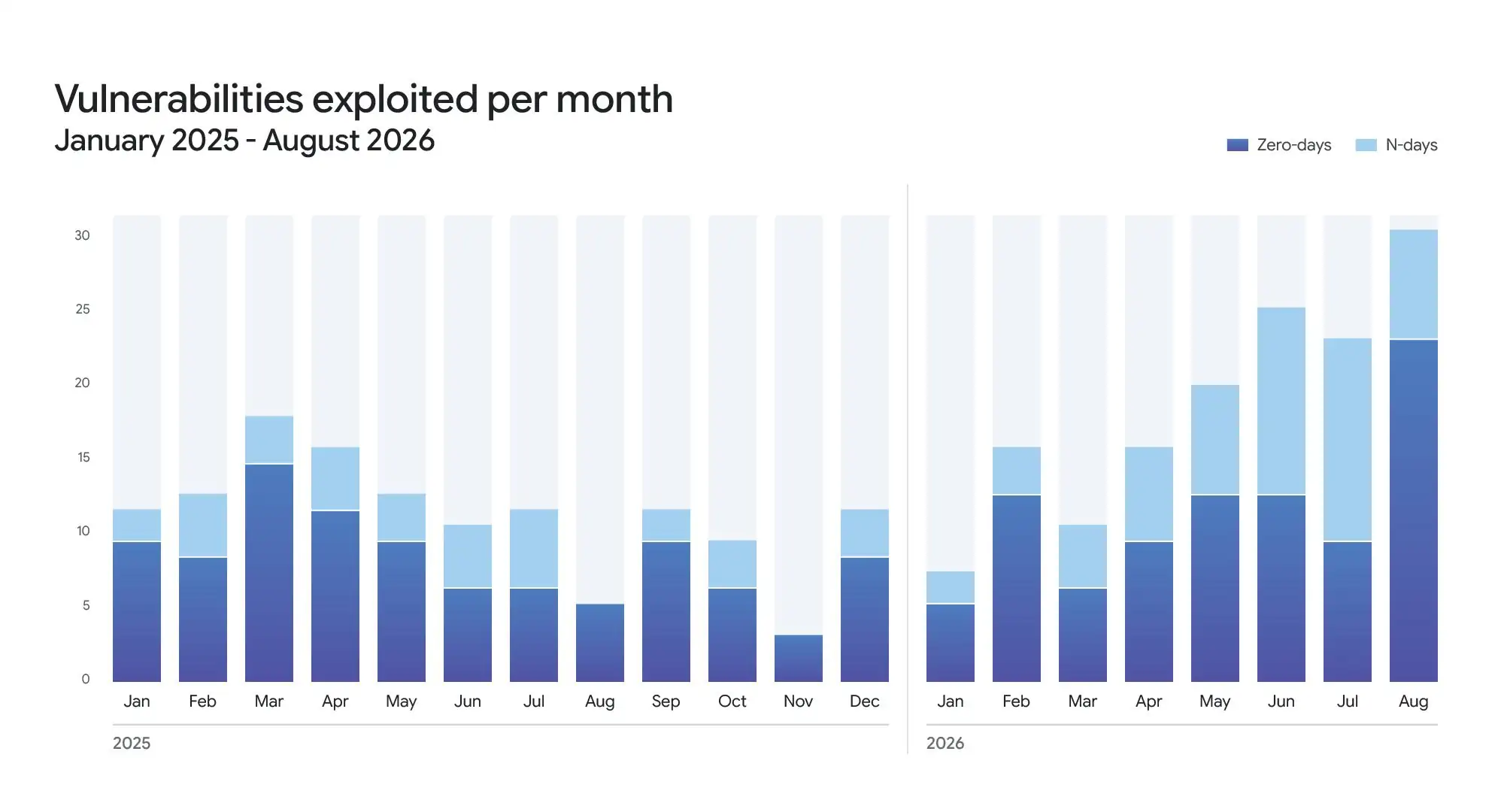
Google counted about 8 new flaws with no fix yet being used in attacks each month in 2025. That rose to 11 a month in 2026, then jumped to 22 in August.
The time between a fix and an attack is also collapsing. In one case this year, researchers had a working attack within a day of two printer-server flaws being made public. Four days after disclosure, an attacker was using them against hundreds of organizations.
AI also creates noise. After a recent flaw in common website software, hundreds of fake "proof" attacks appeared online, likely written with AI. Security teams had to check each one.
Your AI accounts are now a target too
The report describes a fast-growing crime: stealing a company's AI accounts and cloud computing to run up usage. Attackers take login keys left in public code or tricked out of staff. Then they switch on AI services in the victim's cloud account and sell access to others.
The cost lands on the victim. Single-day fraudulent charges topped $100,000 in some cases, and the worst reached $1 million before anyone stopped it. In one case, a single set of stolen logins drove millions of requests to AI services in about 24 hours.
These stolen accounts are sold on underground markets, and prices vary widely by AI model and type of account.
What it means for companies in Indonesia
Most of these attacks still use old tricks, such as stolen passwords and unpatched systems. The difference is speed. A website that waits a week to install a fix now faces attackers who can be ready in a day.
Google's researchers note one weakness in the attackers' tools. They are fast but noisy, and leave clear traces that good monitoring can catch. Google expects them to get quieter as the AI behind them improves.
The report also covers state-backed groups using AI for research and fake online personas. For most businesses, the practical risks are the first two: faster attacks on unpatched systems, and stolen AI accounts.
What to do this month
- Treat security fixes for websites and plugins as urgent. Aim to apply them within a day or two of release.
- Find every login key for AI and cloud services in your code and shared files. Move them somewhere safe and replace any that were exposed.
- Set spending alerts and caps on every AI and cloud account, so a sudden jump in use rings an alarm within hours.
- Ask your security team or partner whether they watch for the noisy patterns these AI tools leave behind.