
GitHub rebuilt how it stores code because AI agents now write so much of it
In tests, its new system handled 5,000 AI agents working on one project at once. GitHub expects today's short bursts of activity to become constant within a year.
The short version
- GitHub, where many software teams keep and share their code, has rebuilt the system that stores it.
- In GitHub's own tests, 5,000 AI agents worked on one project at once, saving 7,200 changes a second.
- GitHub expects today's short bursts on its busiest projects to become constant within a year.
What GitHub built
GitHub announced the new storage system at its Universe conference and explained it in a detailed post. It calls the design Rubicon, after the point of no return. GitHub says the software industry crossed that point when AI agents started writing code.
These agents are AI programs that write and change code on their own. Unlike people, they work in parallel and around the clock. Many can work on the same project at once.
The numbers explain the rebuild. Today the busiest projects on GitHub receive at most dozens of saved changes in a single second, in short bursts. GitHub expects those bursts to become a steady rate within the next year.
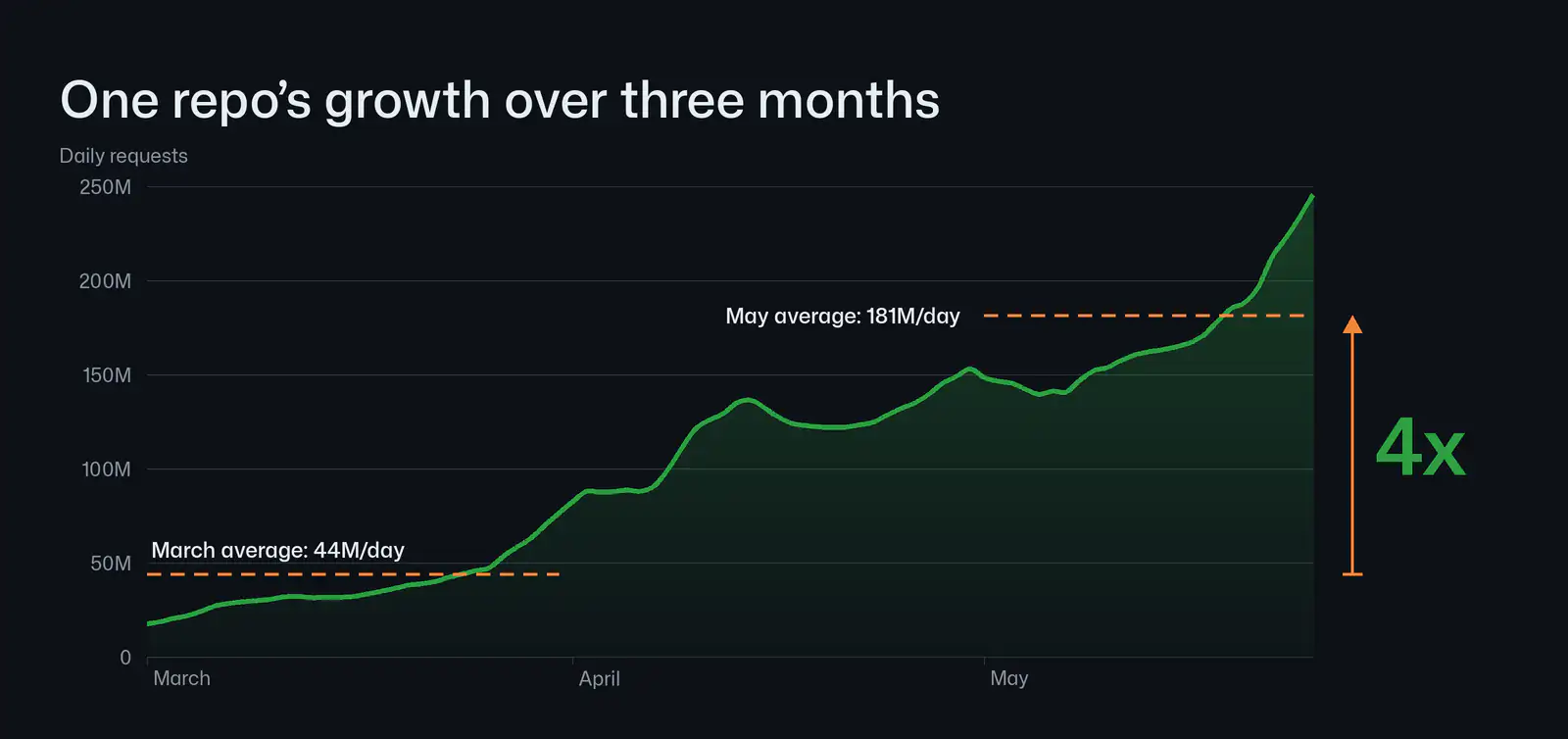
Each saved change also sets off more work. Tests run, other systems pull the new code, and other agents read it to stay up to date. One project's traffic grew about 4x in two months this year, and GitHub says it has kept growing fast since.
So GitHub planned for at least a hundred times today's load.
How it works, in plain terms
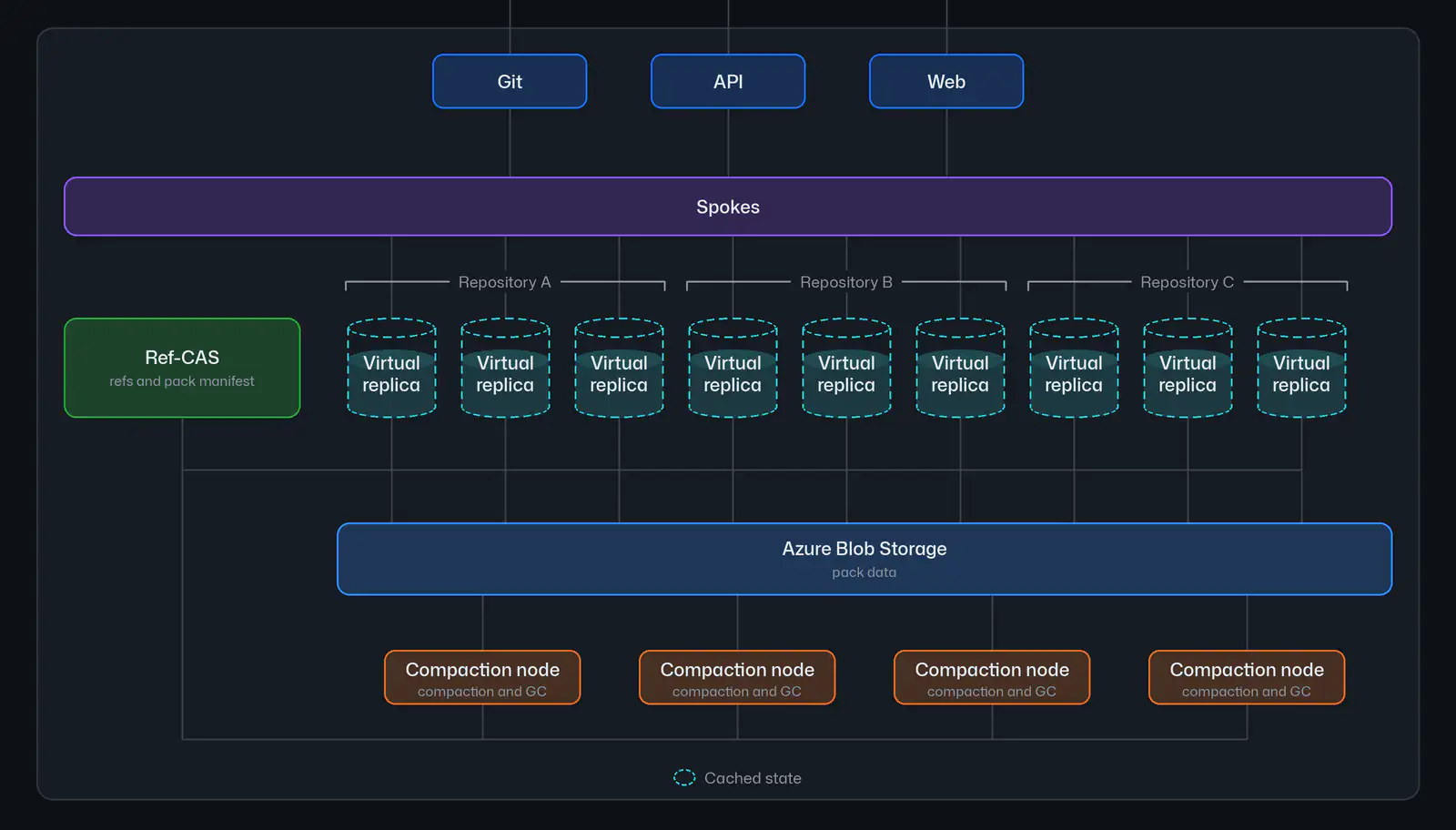
The old design kept storage and processing closely tied together. The new one separates them, so each can grow on its own.
Only one small detail needs every computer to agree: which version is the latest. GitHub built a dedicated service just for that record. Everything else can be stored side by side without waiting.
When a project gets busy, GitHub adds more computers to serve it. If one of them fails, the others keep working. A replacement catches up as traffic arrives. Tidying up old data runs on separate machines in the background. For developers, nothing changes. They save and share code exactly as before.
GitHub wants every project to run on this same design, from one person's side project to its busiest. A small project can pick up a fleet of agents overnight. GitHub says it shouldn't need special handling when that happens.
What it means for your company
Your own software setup may feel similar pressure as agent use grows. Most companies run more than just code storage. They run test systems, release pipelines and security scanners. Each of these was sized for people working at human speed.
When your teams start using coding agents, these systems can become the bottleneck, or the surprise cost. A test pipeline that runs on every change will run far more often.
GitHub also lists what it plans next. Agents will be able to work without downloading a whole project. They will be able to save changes to many files in one step. They will also get live feeds of changes as they happen.
What to do next
- Ask your technology team how many AI coding agents you run today, and how many you expect next year.
- Check whether your test and release systems are billed per run. Estimate the cost if runs grow many times over.
- Set limits on how many agents can work on one project at once while you learn.
- Make sure every change an agent makes is still reviewed and tested before it reaches customers.
- Decide who in your company owns the bill and the rules for coding agents.
- If you run your own code servers, ask your technology team whether they can handle agent traffic.