
Indonesia plans a closer watch on AI in banks, hospitals and schools
Indonesia's communications and digital ministry, Komdigi, says oversight of digital technology should follow risk, with finance and health first. It wants security built in from the start and people kept in charge of AI decisions.
The short version
- Indonesia's communications and digital ministry, Komdigi, says it is preparing risk-based oversight of digital technology, including AI.
- Finance and health are named as higher-risk sectors that need closer watching, along with education.
- The ministry wants security and privacy built into systems from the start, with people kept in charge of AI decisions.

What Komdigi said
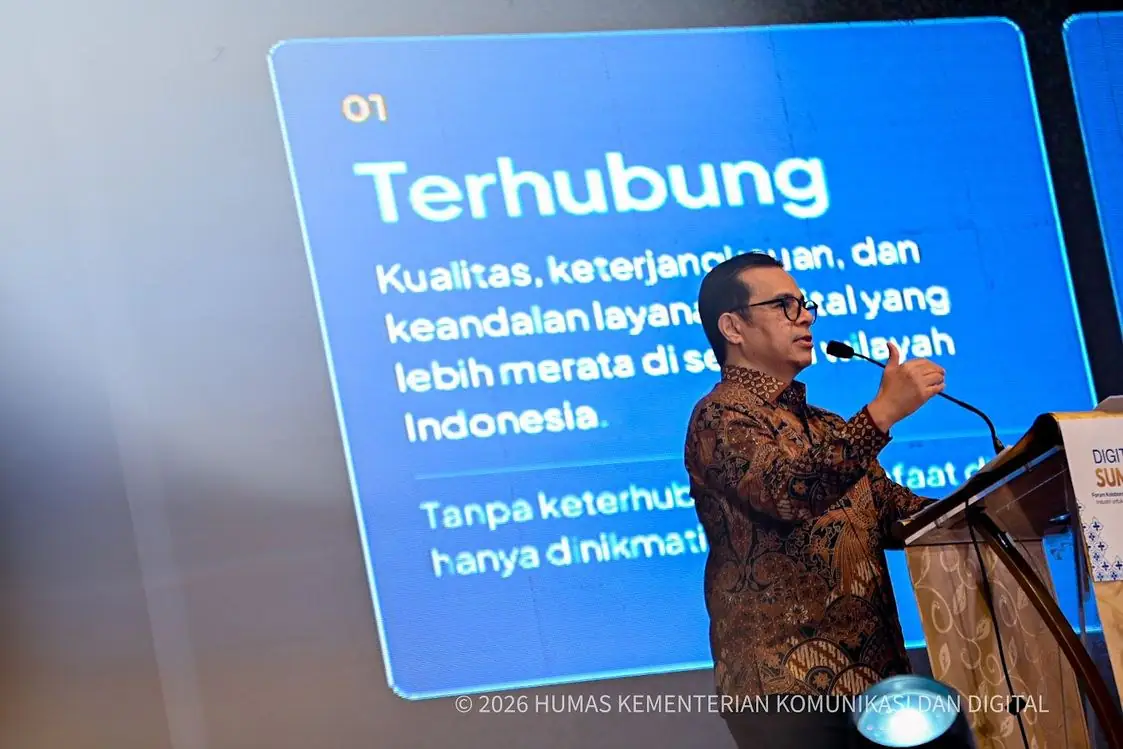
On 13 November 2026, Deputy Minister Nezar Patria spoke at the Digital Leader Summit 2026 in South Jakarta. The ministry issued his remarks as an official press release.
He said the government can no longer apply the same standard to every kind of technology in every sector. The bigger a technology's impact on people's rights and safety, the higher the bar it must meet.
He named financial services and health as relatively high risk. Education is on that list too. Other strategic sectors, such as energy and farming, also need risk management suited to their impact.
In his words, a risk-based approach lets the state protect people in proportion to the risk without holding back innovation.
Why now
Nezar tied the change to rising digital threats. He cited the World Economic Forum's Global Risks Report 2026. It ranks misinformation and disinformation as the second-biggest global risk over the next two years. Cyber insecurity ranks sixth.
AI risk is climbing fast in that report too. It ranks 30th over two years but is projected to rise to fifth over ten years. Nezar said AI makes cybercrime easier to commit and harder to spot. People now face data theft as well as scams that use fake voices and faces.
He then gave Indonesian figures. Data from the Indonesia Anti-Scam Centre counts about 600 thousand fraud cases between November 2024 and June 2026. Losses ran to trillions of rupiah. Only about seven percent of that money was recovered.
What is new in the approach
Two ideas stand out.
The first is prevention over clean-up. Nezar said oversight should shift from handling incidents after they happen to preventing them while a system is still being built. He called this security by design. Security and privacy should be part of the design, along with a way for people to complain. That should happen before anyone becomes a victim.
The second is about how far to go with AI. Nezar said not everything has to be done with AI. Some work suits AI and some suits people. Where AI is used, he said, people must stay at the center of decisions. He called this "human in the lead".
The release reports a speech. It doesn't set rules or deadlines yet. It does signal the shape of oversight that firms in high-risk sectors should expect.
What it means for companies in Indonesia
If you work in financial services or health care, expect closer questions about your AI and digital systems. Regulators will likely ask how a system could harm customers, not only whether it works.
The scam figures matter for any brand with a large customer base. Fake voices and faces make it easier to pose as your company. A scam in your name can still damage trust in your brand.
Security by design also changes budgets. In our view, fixing privacy or complaint handling after launch costs more than building it in. A risk-based regime is likely to reward the companies that can show their homework.
What to do this quarter
- Sort your AI and digital systems by how much harm they could do to customers if they failed.
- For the highest-risk ones, write down who makes the final decision and when a person must check the AI.
- Add a clear way for customers to complain about an automated decision, and test that it works.
- Review how scammers could pose as your brand by voice or video, and tell customers how you will contact them.
- Brief your board on the shift, so they can ask for evidence of security by design in new projects.