
Indonesians have lost Rp 9.3 trillion to online scams, says Komdigi
The communications ministry has received about 600,000 scam complaints. It now ties new SIM cards to a biometric check and wants companies to help teach customers to spot fraud.
The short version
- Indonesia's communications ministry, Komdigi, says it has received about six hundred thousand complaints about online scams. Reported losses come to about nine trillion rupiah.
- Its first response is at the source: new SIM cards now need biometric registration under a 2026 ministerial rule.
- The deputy minister says stronger systems are not enough. Customers need to learn how scams work and how to pay safely.
What Komdigi said
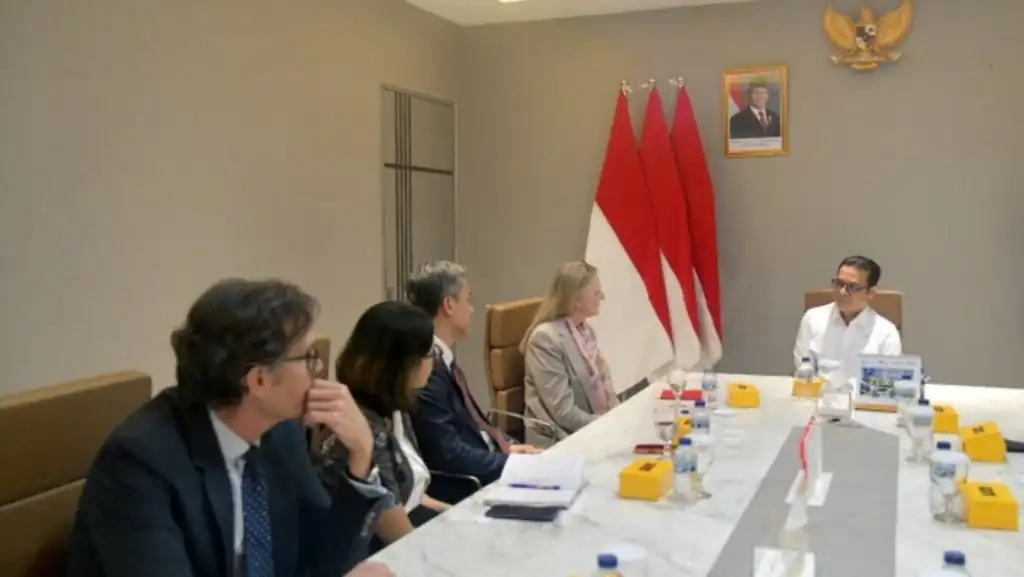
Deputy Minister Nezar Patria gave the figures on 16 November, at a meeting with Mastercard representatives at the ministry in Jakarta.
The deputy minister's point was that better connectivity has brought more crime with it. Nezar said cybercrime has risen. The number of scam cases is now "very worrying", and the ministry has logged around six hundred thousand complaints.
Nezar described two lines of defense. The first is technical. The second is public awareness, which the ministry calls urgent as more people bank and pay online.
What is actually new
The technical step is in place. Ministerial Regulation No. 7 of 2026 covers how mobile users register SIM cards. It requires a biometric check when someone signs up for a SIM card.
The aim is to stop scammers using numbers that can't be traced to anyone. If every number is tied to a verified person, the ministry says, it can identify users accurately and prevent crimes by people with bad intentions.
The second step is wider education. Nezar said the work is about more than building strong infrastructure. Businesses and the public both need to understand common scam methods and how to transact safely.
Singapore is taking a different route to the same problem. Its central bank, MAS, said on 18 November that five banks are already pooling transaction data so AI can spot scam patterns no single bank sees alone. One country starts with who owns a phone number; the other starts with where the money goes.
What it means for companies in Indonesia
Scams cost Indonesians money, and they cost the brands scammers pretend to be. Banks and e-wallets are obvious names for fraudsters to borrow in fake messages and calls.
Biometric SIM registration should make it harder to run scams from disposable numbers. It will not stop a customer from being talked into sending money themselves. That is why the ministry pairs it with education, and why companies are part of the plan.
Singapore's Gan Kim Yong made a point in the keynote that fits Indonesia too. Scams are not confined to one bank, so a bank that sees only its own slice of the trail cannot stop the whole chain. In Indonesia, banks and wallets each see one part of a scam today, and telcos see another.
Most scams end on a company's own screen. A scam ends in a payment, a login or a password reset. The company that runs that screen is best placed to slow the customer down and warn them.
What to do
- Publish one plain page that lists the only channels your company ever uses to contact customers.
- Add a short warning at the riskiest moments, such as a first transfer to a new account or a password reset.
- Track scam complaints that use your brand name, and report them to the ministry's complaint channels.
- If you run a bank or wallet, follow Singapore's work on pooled scam detection across banks.
- Train customer service staff to spot and escalate reports of impersonation quickly.