
Microsoft says fake targets can trick AI hacking tools into giving up early
Microsoft has published a guide to ARTEX, an AI tool attackers use to break into company systems. It uses old tricks at machine speed, and decoys can waste its time or convince it the job is done.

The short version
- ARTEX is an AI tool that runs a cyberattack with little human help. Since July, groups backed by governments have used it, Microsoft says. Criminal gangs use it too.
- It uses no new tricks. It runs familiar attack tools very fast and keeps retrying until something works.
- Microsoft says decoys and fake wins pulled attack traffic away from real systems in its own tests.
What Microsoft found
ARTEX was posted online as free code in July 2026, with a Chinese-language screen. The original author took it down in October. Copies made by others are still being shared, in many languages. In November, a China-based security company claimed ownership and began selling a paid version.
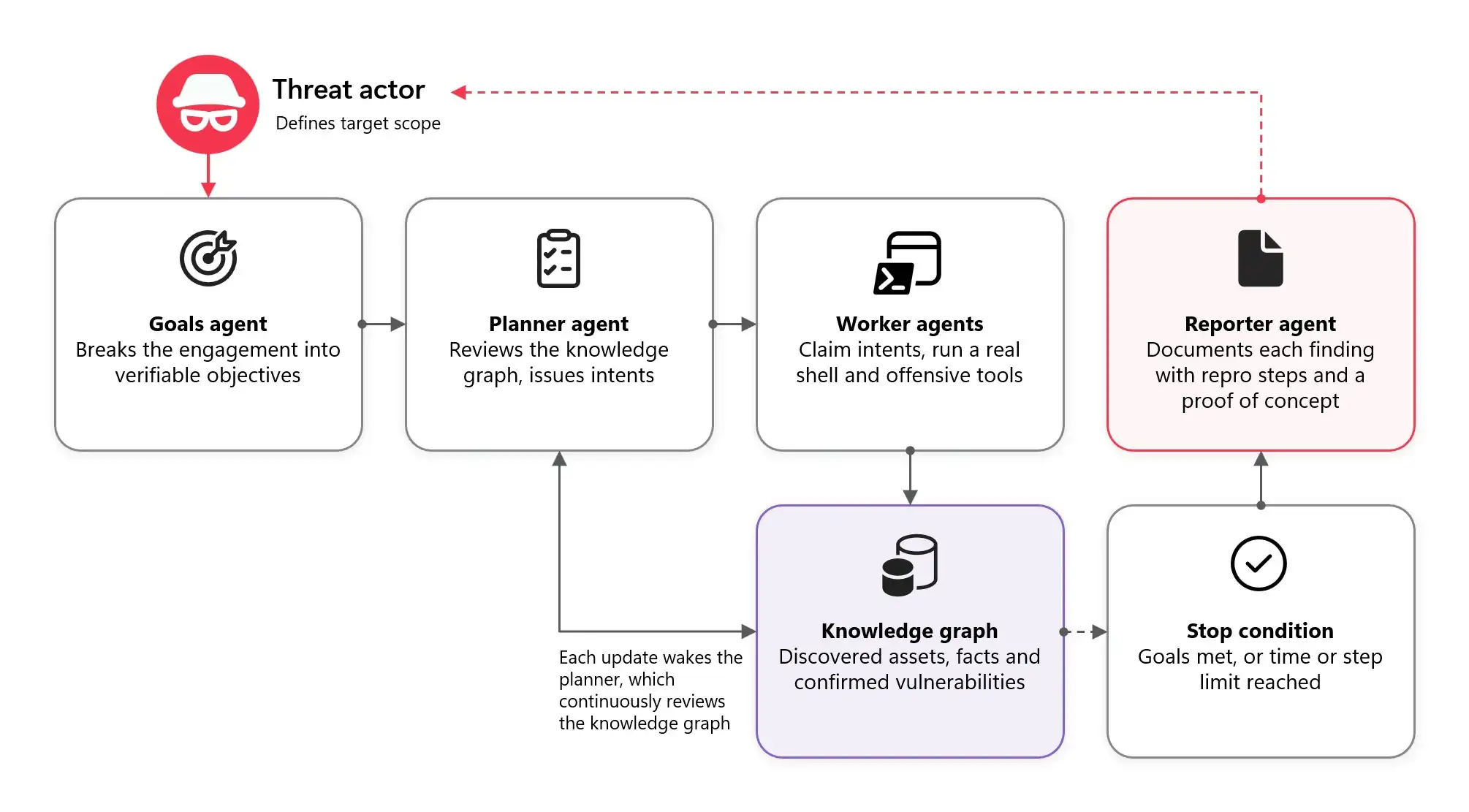
The attacker picks a target. ARTEX then splits the job between several AI helpers. One sets goals. One plans the next move. Others carry out the work with real hacking tools and record what they find. The attacker can plug in almost any AI model, including ones with their safety limits removed. When one model fails or runs out of credit, ARTEX switches to another.
ARTEX keeps a running map of every system it finds and what it learned there. The planner reads that map to choose the next step. At the end, the tool writes a report for the attacker.
It mostly attacks websites and the systems behind them. It tries known weaknesses and guesses passwords. It also hunts for passwords and keys that developers left in public code.
What is actually new
Microsoft says the most reliable sign of ARTEX is its rhythm. A human attacker pauses between steps. ARTEX tries method after method in fast bursts. It also makes no effort to hide, so normal break-in alarms still catch much of what it does. Once inside, it often drops small control programs on web servers. It renames and retries them until one runs, which leaves a clear trail.
The most interesting advice is about decoys. Fake servers give the AI tempting targets that lead nowhere. Slow-responding traps burn its time and its budget. A planted fake win convinces it the goal is reached, so it stops. In Microsoft's testing, these measures cut the attack traffic that reached real systems. They also gave clear evidence of who was attacking.
What it means for companies in Indonesia
Tools like this make attacks cheap. A gang no longer needs skilled staff for every target. Any company with a public website or customer app is worth a try.
The good news is that the basics still work. ARTEX uses known tricks, so known defenses stop much of it. The danger lies in old gaps you meant to fix, because the tool will find them first.
Microsoft also warns that blocking one internet address or one known file pattern won't hold. Attackers change these values easily. Watching for bursts of machine-speed activity works better. So does a plan to cut off a hacked account or server automatically, before a person has time to react.
What to do
- List everything your company exposes to the internet. Close what nobody needs.
- Turn on blocking, not just logging, in your website firewall. Limit how many requests one visitor can send in a short time.
- Have your developers search your code for passwords and keys. Move them to a proper vault and change any that leaked.
- Require two-step sign-in for every account. Admins should use the strongest kind.
- Run regular, approved attack drills on your own systems so you find the gaps first.
- Ask your security team or provider about decoys. They are now a practical way to slow AI attackers down.