
2 in 3 firms Anthropic studied are hiring less because of AI
Anthropic interviewed staff at 58 US companies about how AI is changing their work. Few had laid anyone off, but most were hiring less. The biggest gains came to firms that redesigned jobs around AI.
The short version
- Anthropic's researchers interviewed people at 58 US companies, all its own customers, about nearly 300 ways they use AI at work.
- Very few had laid anyone off because of AI. Yet at two-thirds of the companies, people said they were hiring less, and 9 had cut outside contractors.
- The biggest gains came from firms that changed who does what. Automating a single task, or simply handing out AI tools, delivered much less.
What Anthropic found
Anthropic's economics team ran 66 interviews with leaders and staff at 58 companies in the US. They ranged from AI startups to 100-year-old businesses, and from law firms to a trucking company. All are Anthropic customers, so the authors stress that the sample is not representative.
Most of the value people described came from doing more. Cutting costs played a smaller part. About half of it came from speeding up existing work. The other half came from better products and services, or new ones. A dental company, for example, added an AI answering service, so patients' midnight calls no longer went to voicemail.
The effect on jobs was quieter than the headlines suggest. AI had fully replaced a role, and cost someone their job, at only 2 companies. People at 5 companies described pushing out staff who refused to use AI. And 10 companies were hiring more, mainly people to set up AI and support IT.
The bigger shift was in hiring. At two-thirds of the companies, people said they were hiring less because of AI. Most of it was hiring they once needed to grow, and no longer do. Separately, 9 companies had cut outside contractors, many of them offshore. The work ranged from software and customer service to legal and back-office tasks.
What is actually new
Many firms start with a top-down project: pick a workflow and automate it. The study found these projects often break. Staff fear for their jobs. The experts whose help is needed push back. And the tools go stale as AI models improve. One employee said of such a system that it would be obsolete in 3 months.
Other firms hand out AI tools and wait. That creates a few star users, but their gains stay in pockets. One accountant built an app to audit retirement savings payments, a job that used to take 80 hours. Months later it was still not in active use.
Checking AI's work became a bottleneck of its own. The volume of AI output kept swamping the people who had to review it. Customer doubts and regulation were rarely named as blockers. Most of the friction came from inside the company.
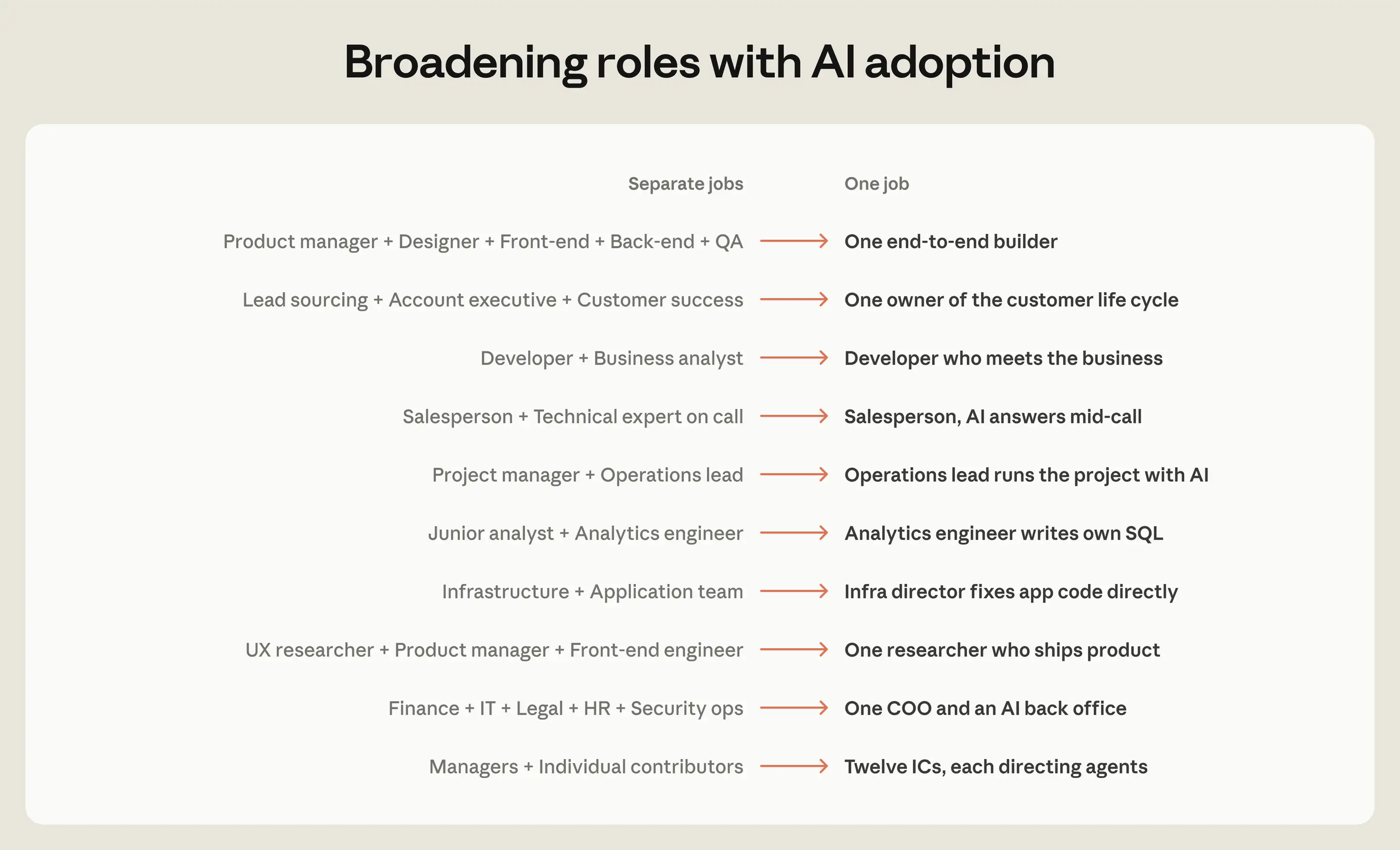
The firms getting the most value did something harder. They widened roles. One person or a small team now owns a whole piece of work. They moved people toward tasks AI still can't do well, such as talking to customers and making judgment calls. And they gave staff broad access to company data, so non-technical people could run their own analysis.
What it means for companies in Indonesia
If your company outsources work like call centers or back-office processing, those contracts may be the first to feel the effect of AI. In the study, self-contained jobs that are easy to hand off were the most exposed.
The study also suggests a different starting point for AI programs. Buying a tool for one department is easy. The gains come when someone with authority redraws roles around it. That makes AI a job for the leadership team, with IT in support.
What to do
- Before automating a workflow, involve the experts who run it, and be clear with them about what happens to their jobs.
- Find the next bottleneck. If AI speeds up drafting, plan who will review the extra output.
- Give staff safe, broad access to company data, with clear rules on what stays private.
- Track the hiring you are no longer doing, alongside any job cuts. It shows where AI is already changing your headcount.
- Review any AI tool built for one fixed task every few months, since newer models can make it obsolete.