
Ant Group built 1 AI model to catch fake photos, videos and documents
Ant Group's forensics team says a single model now beats specialist detectors on edited images, masks and documents photographed on screens. Banks and platforms that check identity should test it on their own cases.
The short version
- Ant Group's forensics team has published DefakerOne2, a single model that checks images and videos for forgery, including faked documents.
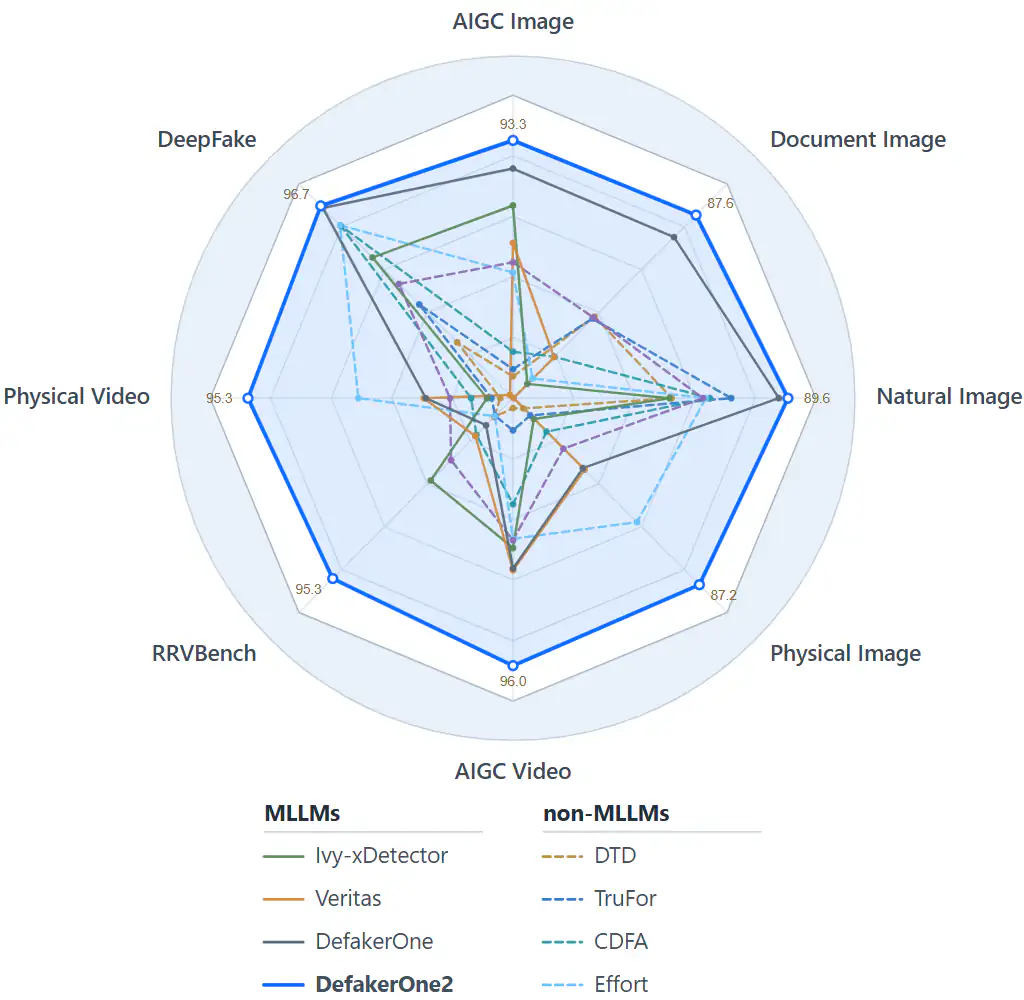
- In the team's own tests it ranked first in all 8 forgery categories, and its average video score rose from 57.6 to 95.7 out of 100 against the previous version.
- Anyone can download it, but the fraud you see in Indonesia may differ from its training data, so test before you rely on it.
What Ant Group released
Fraud with images now takes several forms. Someone can edit a photo or generate a fake one with AI. Someone can also attack the physical step, by wearing a mask in front of a camera or photographing an altered document on a screen.
Researchers have usually studied these as separate problems, each with its own detector. So a company that checks identity or claims might need several tools.
DefakerOne2 puts them together. The team trained it on about 50 million samples, including real attacks labeled by hand. You give it a picture or a video, and it says whether the item is real or fake. It can also mark which part looks altered.
What the results show
The team ran the model through 53 standard tests for spotting forgeries and 14 for locating the altered area. It set a new best on most of them. The largest gains came where the older version was weakest. All scores here are averages out of 100.
- Images: from 80.4 to 90.9.
- Videos: from 57.6 to 95.7.
- Physical tricks: from 50.7 to 87.2, a type of attack the old version wasn't built to handle.
The team also built a new test using fake videos from 11 recent video generators, because public test sets rely on older ones. DefakerOne2 scored 95.3. The best rival, a much larger model, reached 69.8. The team reports that it never lost to a specialist detector in that specialist's own field.
These are the authors' own results, on tests they selected. Tests only cover known tricks, so new forgeries can slip through.
What it means for your company
This matters most where your business accepts a picture as proof. Think of a bank opening an account online, an insurer paying a claim from photos, or a marketplace approving a seller.
The appeal of a single model is simpler upkeep. One system is easier to maintain than several.
Two points need checking first. The first is fit. The paper makes no mention of Indonesian ID cards or local documents, so you can't assume it works well on them. The second is false alarms. When the model marks altered areas, its most common mistake is flagging genuine images. A wrongly rejected customer costs you money too.
There are also licensing details. The code uses a free license. The model itself follows the terms on its download page, and the team's new video test is for non-commercial research only. The model is built on Qwen3.5, an AI model from Alibaba. Have your security team review it as they would any downloaded AI.
What to do next
- List each process where you accept an image, video or scanned document as proof, and who would gain by faking it.
- Test the model on your own past cases, both proven fraud and genuine customers. Include Indonesian ID cards and local documents.
- Measure how many honest customers it flags, as well as how many fakes it catches.
- Read the model's license before any commercial use, and ask your legal team to confirm it.
- Use it as one signal alongside your other checks, and keep a person reviewing the difficult cases.
- Plan to retest often, because new video generators keep appearing.