
Anthropic's AI can now review, fix and approve routine code changes
Claude Ship lets companies write rules for which software changes the AI may approve on its own. It works with code on GitHub, on Claude's business plans.

The short version
- Anthropic launched Claude Ship, which takes a software change from review through fixes to an approval decision.
- Your team writes a policy that says which changes the AI may approve alone and which need a person.
- It works with code stored on GitHub for Claude's business plans. You pay for how much work it does.
What Anthropic launched
When a developer finishes a change to a company's software, someone has to check it before it goes live. That check is called a code review. The developer then fixes what the reviewer found, runs the automatic tests again, and waits for a colleague to approve it.
Anthropic says many developers now write code with AI helpers, so the writing has sped up while the checking has not. On its own Claude Code team, it says, Claude writes most of the code.
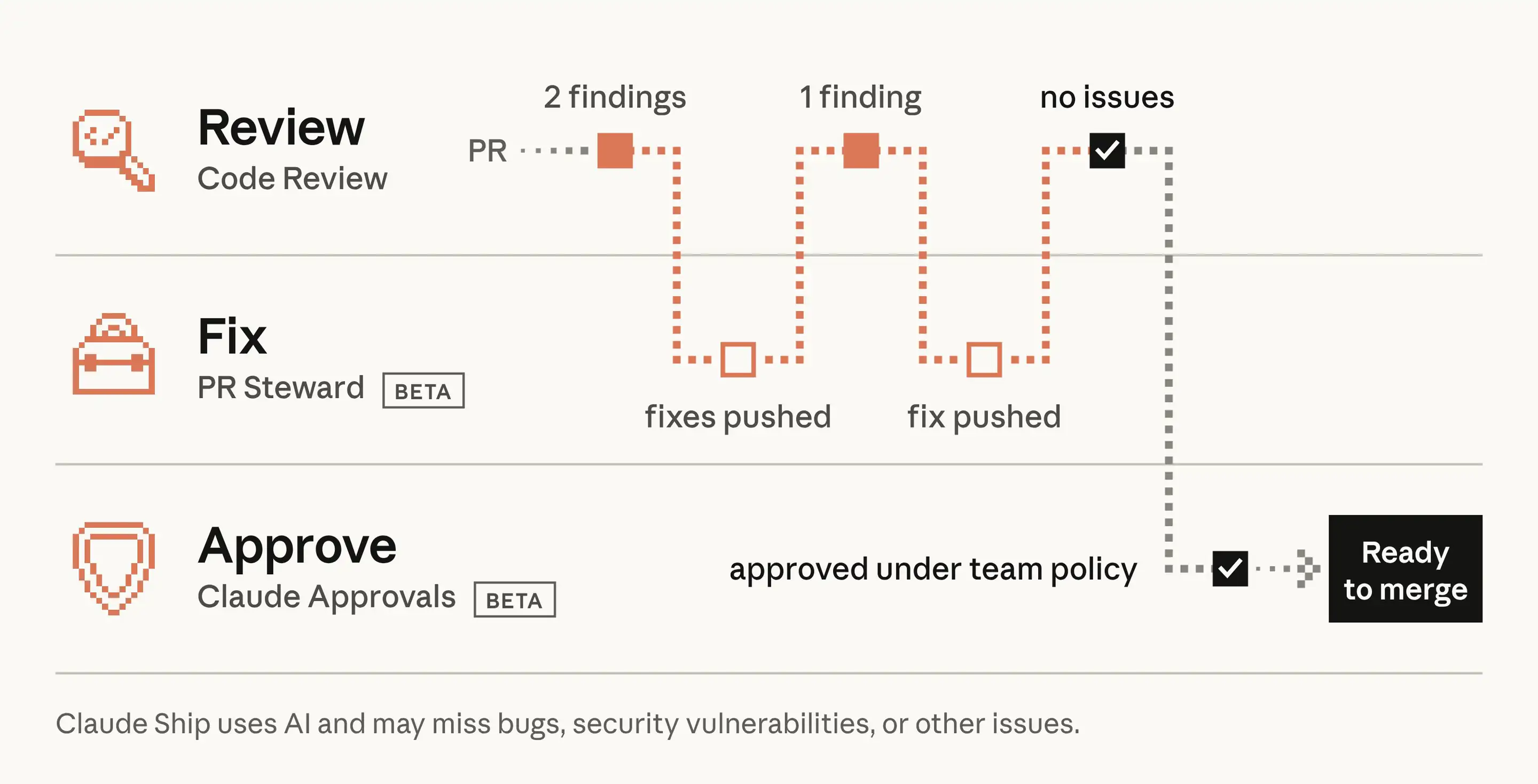
Claude Ship, launched on 23 November, is meant to close that gap. It has three parts:
- Code Review reads each change, checks its findings a second time, and posts them. It was already available, with a choice of quick or deep reviews.
- PR Steward is new. It fixes failed tests and clashes with other changes. It also acts on comments from reviewers. After each fix it explains what it changed and how to undo it. It never approves or merges anything itself.
- Claude Approvals is also new. It reads a policy file your team keeps with the code. If the policy allows it, Claude approves routine changes on its own. Anything the policy marks as sensitive still needs a person.
PR Steward and Claude Approvals are in an early test version. Developers can steer the work by writing a comment to Claude, or tell it to stop.
What is new here
The new step is approval. Until now, most teams have required a person to sign off on every change. Anthropic is offering to let the AI sign off on the routine ones, under rules the company writes down.
Anthropic suggests starting in a watch-only mode. Claude Approvals then runs without blocking or approving anything. Teams can compare its calls with their own before they give it real power. A policy that uses Claude's review still runs a billed review, even in watch-only mode.
Anthropic shares one internal result. On its Claude Code team, where AI review is one layer among several, the number of merged changes more than doubled from June to September. Over the same period, the share of changes later reversed fell by more than 40%.
What it costs and who can use it
Claude Ship works only with code stored on GitHub, and only on the Team and Enterprise plans. Each company pays for how much text the AI reads and writes. The bill grows with the number and size of changes. Deeper and more frequent reviews cost more.
Admins can set a monthly spending limit for each repository, which is a project's code store. Eligible Enterprise customers can claim at least $10,000 in credits by 15 January 2027.
There is one notable gap. Claude Ship is not available to companies that use Anthropic's zero data retention option. Firms using its health-data setup or their own encryption keys are also excluded. Anthropic has said that firms in regulated industries often need zero data retention.
What it means for companies in Indonesia
In many companies that build their own apps, every change waits for a few senior engineers to approve it. A tool like this could shorten that wait for routine changes, such as small bug fixes.
The risk is giving approval rights too early. An AI that approves a bad change can put a fault into a live system. Write the policy file carefully, and keep people on anything that touches payments or customer data.
Regulated firms should also note the exclusion above. If your company relies on zero data retention, Claude Ship is not yet an option.
What to do next
- Ask your engineering lead where code changes wait longest, from review to final approval.
- If you use Claude on GitHub, try it on one low-risk project first.
- Run the approval policy in watch-only mode for several weeks and compare its calls with your reviewers'.
- Set a monthly spending limit before turning it on.
- List the types of change that must always have a human approver, and write them into the policy.