
Databricks wants brands to show ad platforms which customers are worth most
A new Databricks feature lets brands use their own customer data to show ad platforms which sales are worth the most. Google, Meta and TikTok are among the launch partners.
The short version
- Databricks has announced CustomerLake Conversions, which lets a brand tell ad platforms which sales are worth the most, using its own customer data.
- Google, Meta and TikTok are among the launch partners. Several agency partners have also signed on.
- The brand decides what data is shared and with whom, and keeps a record of everything sent.

What happened
Databricks sells a data platform that many large companies use to store and analyze their business data. Its customer data product, CustomerLake, already helps marketers build audiences by typing plain requests. This week it added a feature called Conversions.
The idea starts with a simple problem. Two purchases can look identical in a campaign report. One buyer may become a loyal regular. The other may have bought once, only because of a deep discount. The ad platform counts both as one sale.
The brand usually knows the difference. Its own data shows each customer's purchase history and how much they are likely to spend over time. Conversions lets the brand use that knowledge to tell the ad platforms what a good customer looks like.
How it works
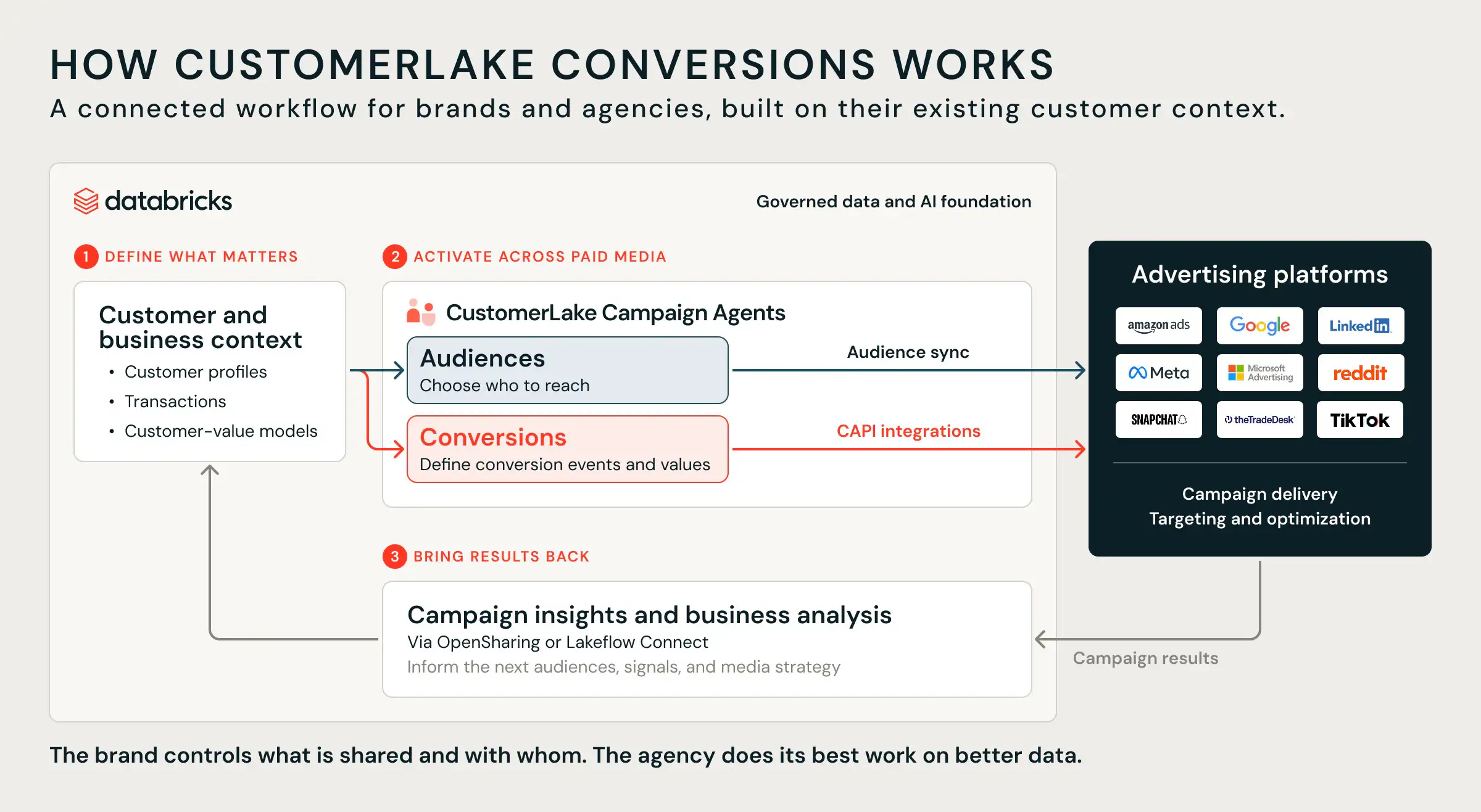
Databricks describes three steps.
- Define what matters. The brand marks the sales it cares about most, such as a first purchase from a customer its models predict will be valuable.
- Send it to the ad platforms. Those sales, and matching audiences, go to the platforms through the direct data links the platforms already offer for this.
- Bring results back. Campaign results flow back into the brand's own data, next to its sales records.
A retailer that wants repeat buyers is Databricks' main example. Today, it sends every purchase to the ad platforms. Its model of which customers will come back sits with the data team, and using it takes manual exports and uploads. With Conversions, the marketing team flags first purchases from likely repeat buyers. The platforms then learn to find more people like them.
What is actually new
Brands could already send sales data to ad platforms. What changes is where the work happens. The work now happens where the customer data already sits. Teams no longer export files and upload them by hand.
Databricks argues this matters more now that ad platforms decide automatically who sees an ad and what to pay. When the platform makes most decisions, the main thing a brand still controls is the signal it sends. Better information should lead the platform to better customers.
The feature is also built for agencies. A brand can give its agency limited access to set up which sales get sent where. Every transfer is logged. Agencies can add their own data and models without copying the brand's customer records.
Databricks also claims a single campaign can take more than 6 teams and 60 days to launch today. Its pitch is that this setup shortens that loop.
The announcement doesn't give a launch date. Databricks says that when Conversions becomes available, all customers using CustomerLake's campaign tools will have it.
What it means for brands in Indonesia
The biggest ad platforms in Indonesia are on the partner list. Brands that already keep their customer data on Databricks get a shorter path to sending better signals.
For other brands, the idea still applies. Ad platforms reward the brands that tell them which customers are worth the most. A brand that only reports "someone bought something" lets the platform chase the cheapest sale. A brand that reports "a likely repeat buyer bought something" pushes it toward better customers.
This also raises the stakes on data quality and consent. Sending richer customer signals to ad platforms means knowing exactly what is being shared, and on what legal basis. Check every transfer against Indonesia's personal data protection rules.
What to do
- Agree internally on what a valuable customer means for your business, in numbers.
- Check whether you can predict it from the data you already hold.
- Ask your ad platforms and agency what sales signals you send them today.
- Review consent and data-sharing terms before sending richer customer data to any platform.
- Compare campaign results by customer value, not just by cost per sale.