
Humanoid robots sorted car parts at Mercedes-Benz with 96% success
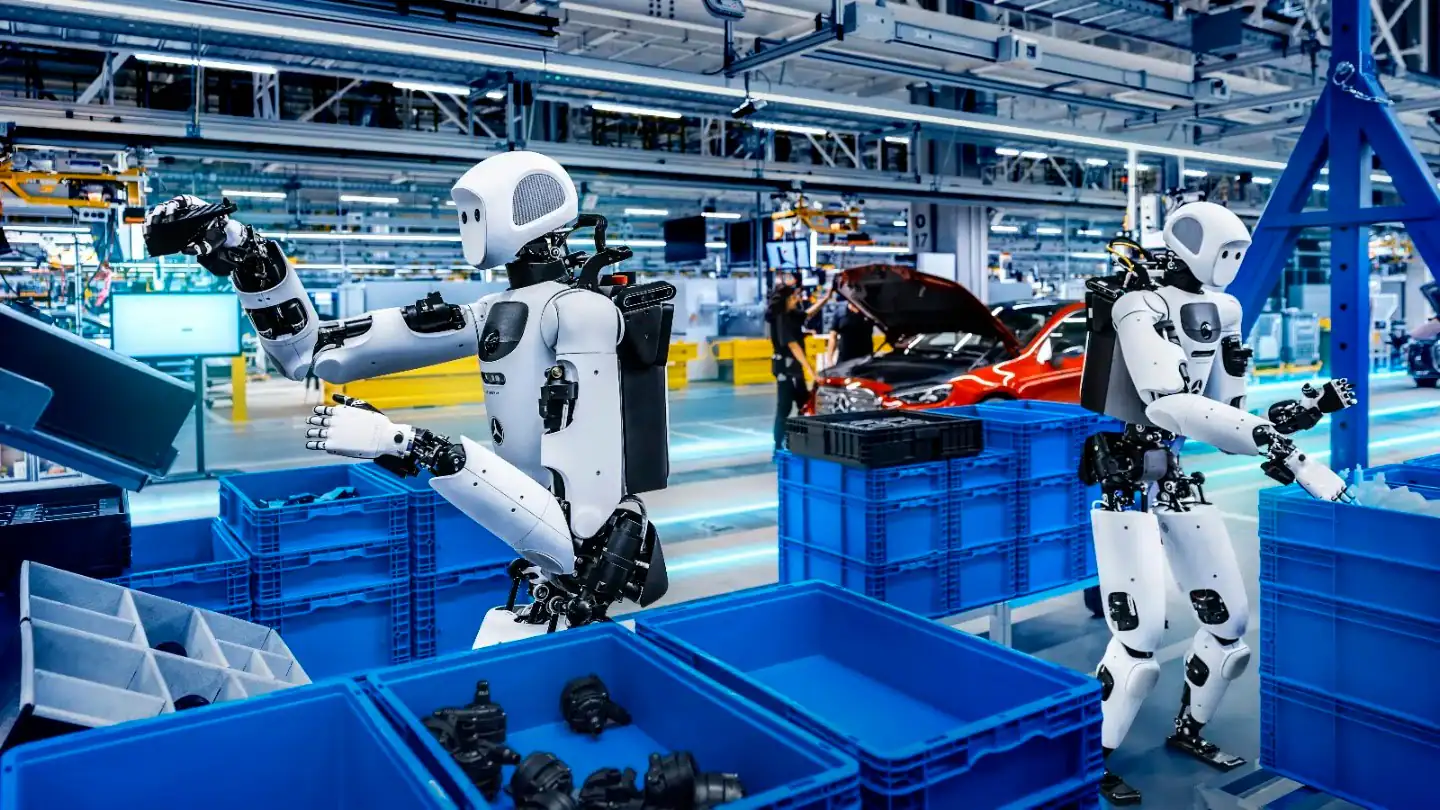
Google DeepMind's new robot AI ran humanoid robots on live car production lines in Hungary and Germany. It is a pilot of factory robots that adjust as they work, instead of following fixed, pre-programmed moves.
The short version
- Google DeepMind released Gemini Robotics 2.5, the AI that controls its partners' robots, this week.
- In a pilot on active Mercedes-Benz lines, Apptronik's Apollo 2 humanoid robots picked and packed car parts with a 96% success rate.
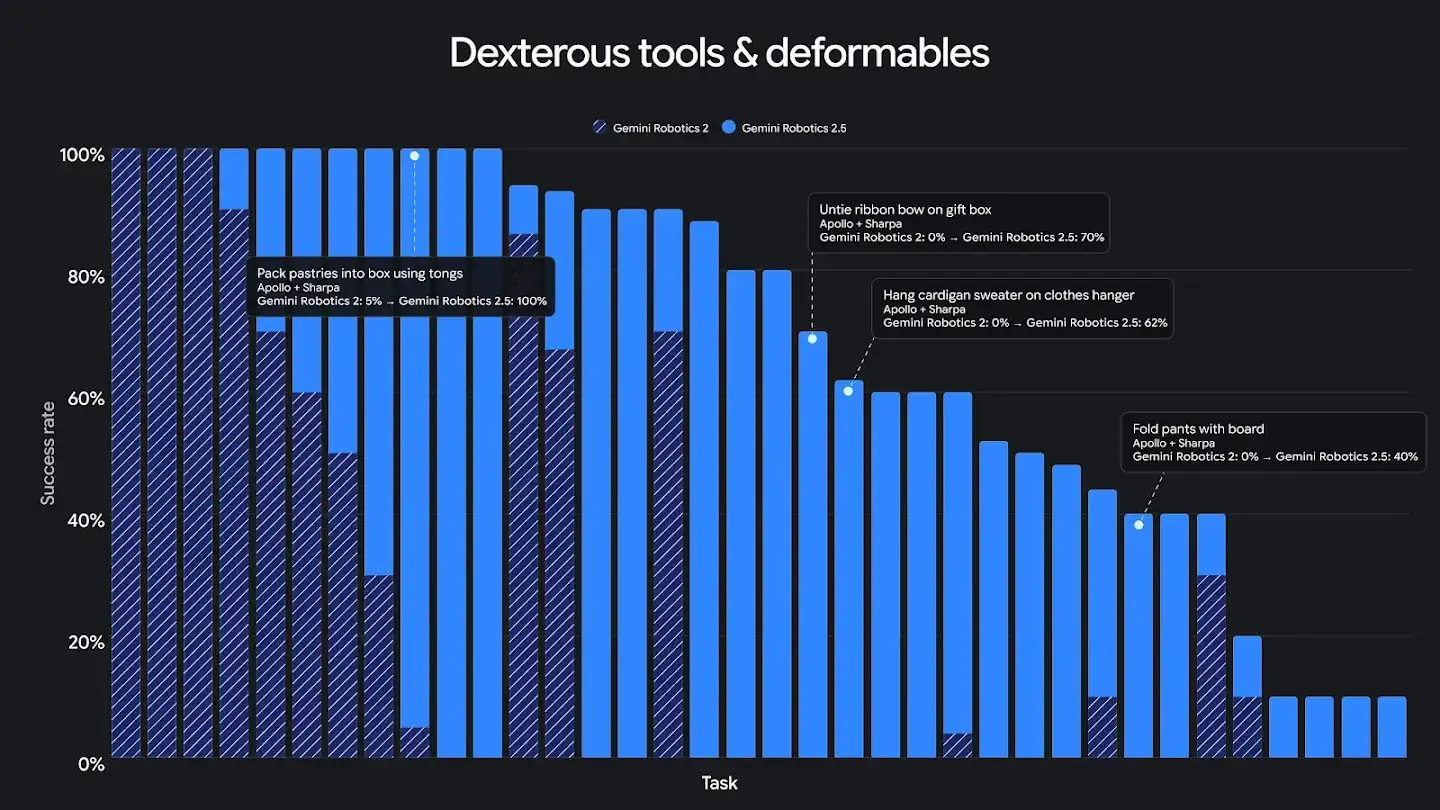
- Across 200 tested tasks, the new version succeeded 30% to 100% more often than the last one, and worked 20% to 30% faster.
What happened at Mercedes-Benz
Google DeepMind and the robot maker Apptronik tested Apollo 2 humanoid robots on working Mercedes-Benz production lines. The sites were Kecskemét in Hungary and Sindelfingen in Germany. The job was kitting. That is the repetitive work of taking single parts from bulk bins and placing them in trays, in the exact order each car on the line needs.
The robots reached into the supply bins and picked up metal brackets. Then they placed them into sorting containers and filled any gaps they spotted. One AI model kept track of the overall workflow. A second one controlled the robot's hands and arms. The robots hit a 96% success rate.
Apptronik said the models improved quickly during a few weeks of extra training. It said the skills carried over to the Mercedes-Benz lines with very little drop in performance. Google DeepMind calls the work a proof of concept. Neither company has announced a wider rollout.
What is new in this version
Most factory robots today follow fixed, pre-programmed paths. They struggle when a part sits at a new angle or a bin is half empty. Google DeepMind's models are built to see the scene and plan several steps ahead. They then adjust as things change.
The company tested Gemini Robotics 2.5 on 200 distinct tasks. These included serving food with tongs, tying a bow on a gift box and dispensing small amounts of liquid. Compared with the previous version, success rates rose by 30% to 100%, depending on the task. Tasks were also finished 20% to 30% faster.
The same AI works on very different machines. It runs on the Apollo 2 humanoid with its five-fingered hand. It also runs on a two-armed robot with simple grippers.
Google DeepMind also reports better safety. Its robots completed tasks safely around obstacles 33% more often than before. Around nearby people, the gain was 43%. A separate test checked whether people could trick the robot AI into unsafe actions. Google's newest model resisted 99.5% of these attempts, up from 82% for the previous one.
Another Google model, Gemini 4 Argon, helped speed up the work. From a single camera view, it created thousands of simulated practice runs, which let the robots learn new scenes faster.
What it means for manufacturers in Indonesia
Many Indonesian factories still rely on people to pick and sort parts by hand. Those are the jobs this pilot targets. Fixed automation pays off only when a line runs the same product for years. A robot that adapts to new parts could pay off for plants that change products often.
It is still early. A 96% success rate in a pilot means about 4 picks in every 100 still go wrong, and the line must catch them. Humanoid robots are also costly, and none of the companies has published prices or a launch date.
The practical lesson for now is about preparation. These robots learn from demonstrations and camera footage of real work. Plants that already record and measure their manual handling will be ready sooner when the technology arrives.
What to watch
- Whether Apptronik and Mercedes-Benz move from pilot to paid rollout, and at what price.
- Error handling. Ask any vendor what happens on the misses, and who fixes them.
- Safety rules. Humanoids working near staff will need clear local standards and insurance terms.
- Which of your own manual tasks repeat most often and change most often. Those are the first candidates.