
A US health insurer's AI agents now sign 2,000 doctor contracts a week
Curative built an AI agent that negotiates with clinics from first email to signature, checked by smaller agents and people. It now signs in a week about what its team signed in all of 2025, and the team grew rather than shrank.

The short version
- Curative, a US health insurer, now signs 2,000 to 2,400 contracts with doctors and clinics a week using AI agents. In all of 2025, its team signed 2,100.
- Its main agent handles a deal from first contact to signature. Smaller agents check its prices and read every message before it goes out.
- Staff were not replaced. The contracting team grew from 45 to about 55 people, and each is about 2.5 times as productive.
What Curative built
Curative sells health insurance to employers. To do that, it needs a national network of doctors and clinics who agree to its rates. Each one needs its own contract.
Last year the company signed 2,100 contracts, double the year before. Its CEO, Fred Turner, did the math. At that pace, building a national network would take 30 years.
Hiring alone could not close the gap. So the company built Gwen, an AI agent that works one provider deal at a time. Gwen runs on Anthropic's Claude.
Gwen researches each practice and proposes rates based on market pricing data. It handles back-and-forth on contract changes and writes up the final document. A deal can go from a web form to a signed contract in as little as an hour.
Around Gwen sit smaller checking agents:
- A rate reviewer. When Gwen wants to offer more than the standard rate, it must explain why. The reviewer approves about two-thirds of these requests. The rest go to the CEO.
- A message judge. It reads every email and fax before it is sent. Curative added it after Gwen copied providers on internal notes about how high it could go.
- A human. Unusual pricing or big medical groups still go to a person.
What is actually new
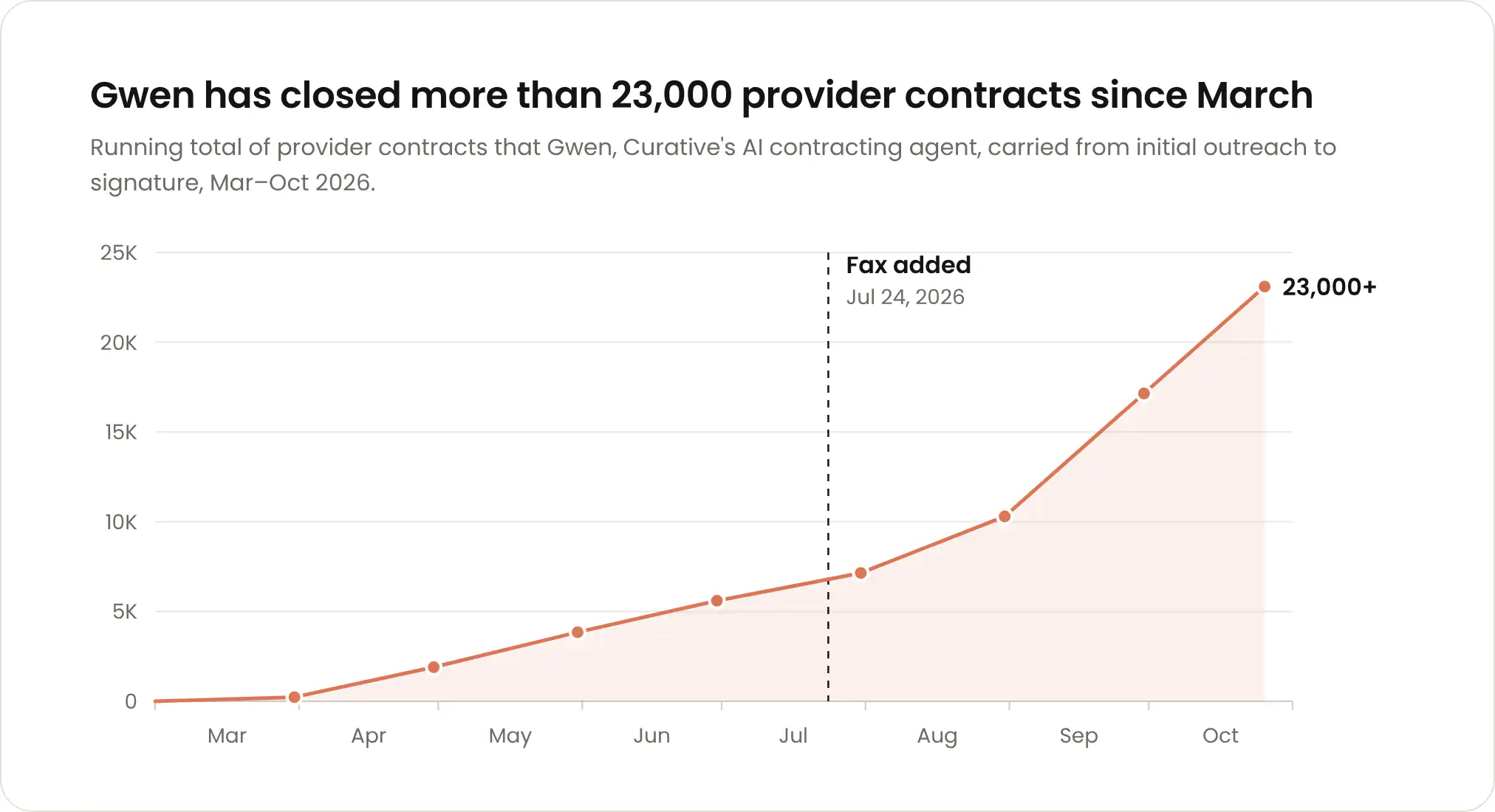
Gwen has now signed more than 23,000 contracts. Curative says that is about 50 times faster than its team managed in 2025.
Fax mattered. Many small clinics still prefer it, and adding a fax tool more than doubled Gwen's win rate. Some providers now handwrite changes on a printed fax and send it back.
Each deal runs on its own. Gwen sees one provider at a time and keeps no memory across deals, so nothing from one negotiation leaks into another.
Limits came first and loosened slowly. Gwen started with a human approving every above-standard rate. The rate reviewer agent came later, once the team trusted the pattern.
The gains spread beyond contracts. Replies to claim disputes used to take about 90 days. Curative now answers them in under 30 minutes, with a letter that explains the specific claim. A team of 13 engineers rebuilt the claims system this year with AI coding help, a job the company once expected to need 100 engineer-years of work.
What it means for companies in Indonesia
Many Indonesian businesses run on large numbers of small contracts. Think of insurers signing up clinics, or distributors signing up shops. That work is often slow because each deal needs a person to chase it.
Curative's lesson is that the agent did the chasing and the paperwork, while people kept the relationships. Its staff now take warm leads by phone and leave cold outreach to Gwen. The company also pays its team on Gwen's deals. People and the agent share one target.
Gwen once leaked internal pricing notes to a provider. A second agent now reads every message first. If you put an agent in front of customers, plan the checks before it goes live.
Curative's CTO put the bar plainly. Compare the agent's mistakes with those a large team doing the same work would make.
What to do next
- Find one high-volume deal process that follows clear rules, where a backlog costs you revenue. Supplier onboarding is a common example.
- Start with tight limits: a person approves anything outside the standard terms.
- Put a second automatic check on every outgoing message before customers see it.
- Meet partners on the channels they actually use, even if that means WhatsApp, or fax.
- Measure regrettable mistakes against your current team, not against perfection.