
AI sorting is helping recyclers sell more of what used to go to landfill
AI cameras and robots now sort waste, from plastic bottles to used clothing, far more finely than people can. That makes recycled material more competitive with new, and gives brands data on what happens to their packaging.
The short version
- Four young companies are using AI cameras and robots to sort waste far more finely than people can, so more of it can be sold and reused.
- Greyparrot's AI cameras cut the time needed to check 15 tons of waste from 375 hours to 6. Plants using them report efficiency gains of 10% to 30%.
- A Taiwanese firm plans a line next year that would nearly triple its capacity while cutting running costs by 85%.
What the companies are doing
NVIDIA published the examples as world leaders met for the COP31 climate talks in Türkiye, where zero waste is a focus. All four companies are in NVIDIA's startup program and use its chips.
The problem they tackle is simple to state. Recycled material only gets used if it can compete with new material on price and quality. Mixed, badly sorted waste usually can't, so it ends up as low-grade products or in landfill. Sorting by hand is slow, and the workers are hard to find.
Here is what each company does:
- AIRECO (Taiwan) uses cameras and AI to sort plastics very finely, so a bottle can be recycled back into a bottle. On its pilot line in Tainan, its recognition accuracy tops 95%. Its planned full line aims to raise yearly capacity from 18,000 to 48,000 tons.
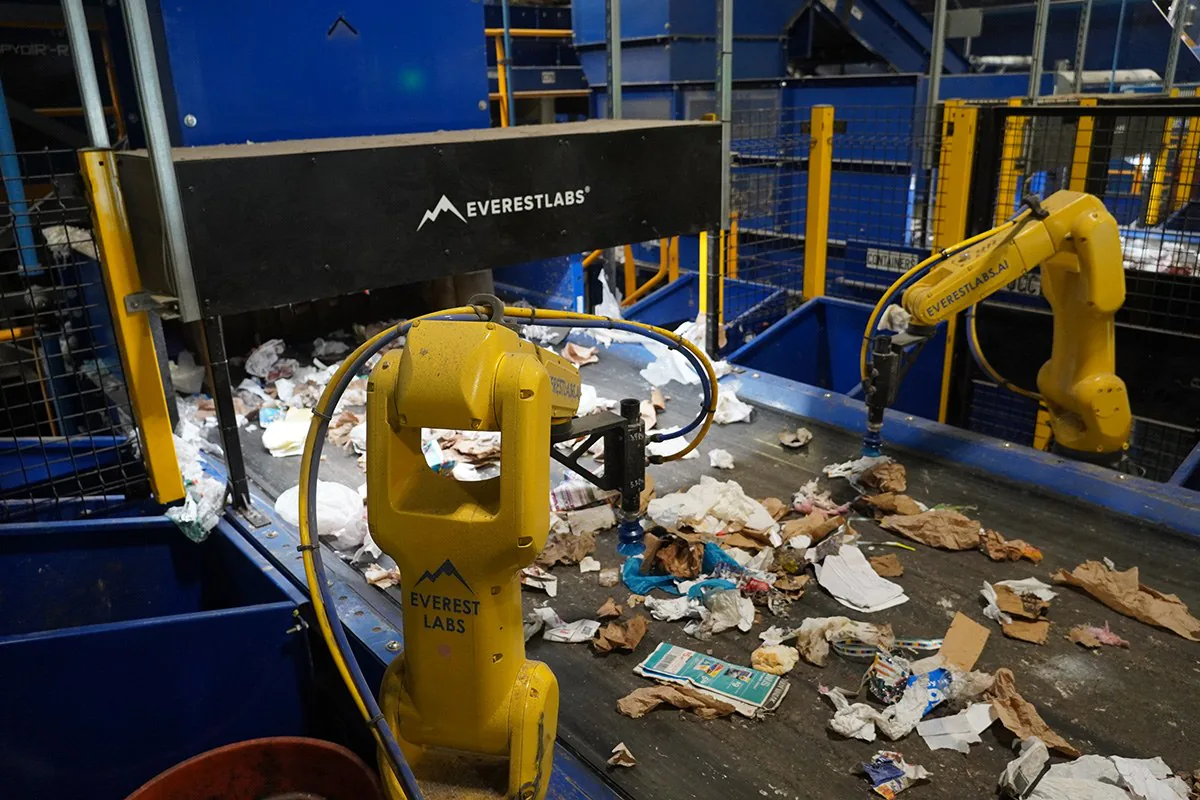
- EverestLabs (US) puts AI-guided robot arms on fast conveyor belts at sorting plants. About 150 of its robots work in North America and Australia. The company estimates they have recycled about 25,000 tons of material so far.
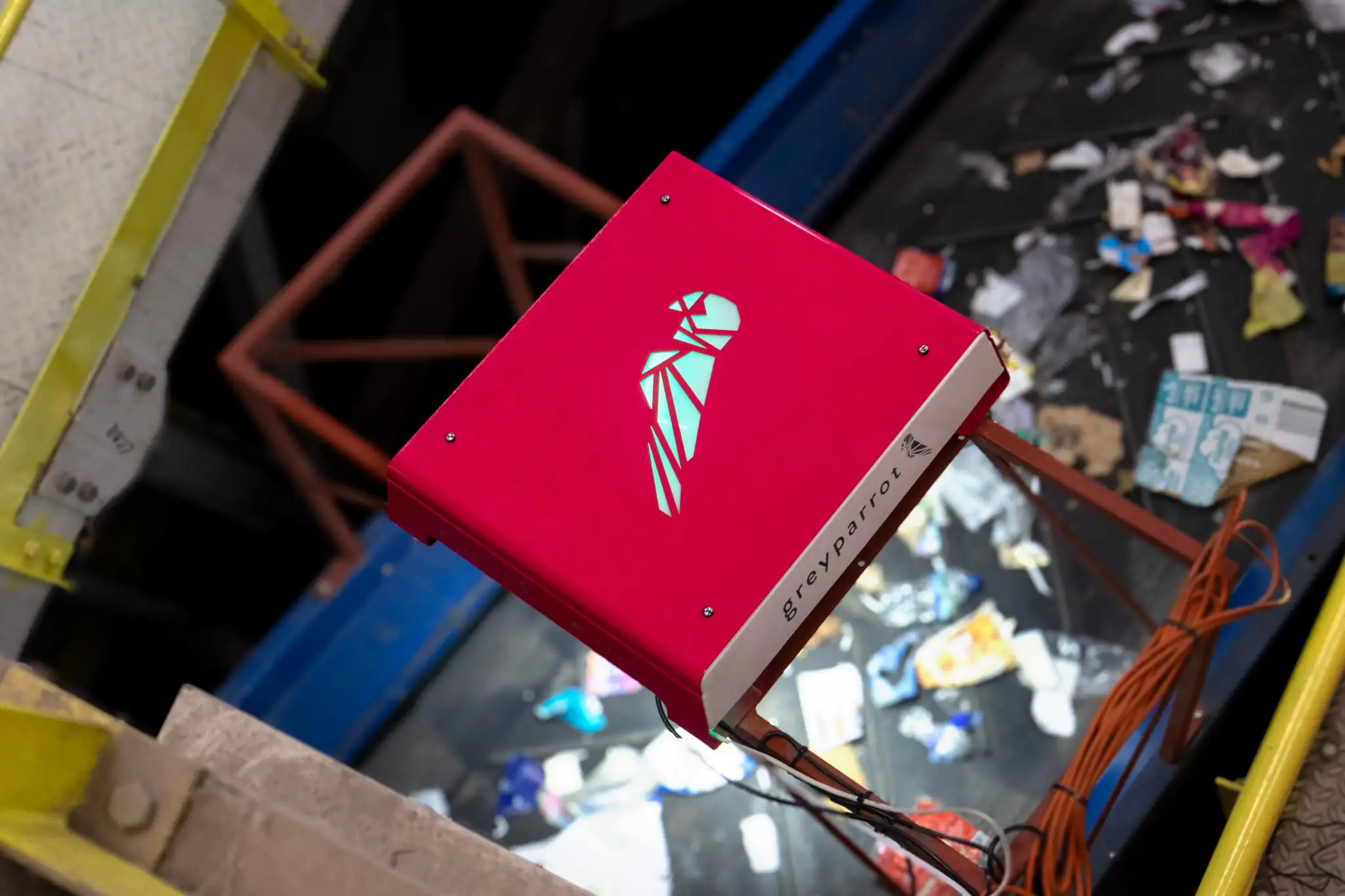
- Greyparrot (UK) mounts AI cameras above conveyor belts to identify each object by material and brand. More than 300 of its units run in over 20 countries.
- reverse.fashion (Germany) sorts used clothing by type, defects and fabric, then sends each item to its most valuable use. Its cofounder estimates it sorts in an hour what used to take a week.
What is actually new
The machines can now see every item on a fast belt and name what it is made of.
Greyparrot shows the change most clearly. Plants have long judged what is on the belt by sampling less than 1% of it by hand. Now every item can be identified as it passes, even on dusty belts moving at up to 4 meters a second.
That data has value beyond the plant. Brands can use it to see how their own packaging fares in real sorting plants. Greyparrot also helped the packaging firm Amcor get 12% more food-grade plastic out of its waste stream.
Clothing is harder. Europe throws away nearly 7 million tons of used textiles a year, and most sorting is still done by hand into hundreds of categories. Fine-grained AI sorting is meant to make resale and reuse pay.
What it means for companies in Indonesia
The same economics would apply in Indonesia. Recycled plastic only sells if it can compete with new plastic on price and quality, and finer sorting is what closes that gap.
For manufacturers and consumer brands, the lesson is about data as much as machines. If AI can tell which brand's packaging ends up where, brands may be asked to account for it. Companies selling packaged goods should expect questions about how recyclable their packaging really is, backed by real sorting data.
For recyclers and waste operators, the economics are changing. AIRECO's planned 85% cut in running costs, if it holds, would make finely sorted plastic far more competitive. That opens room for closed-loop deals, where a brand buys back recycled material made from its own products.
For investors and industrial groups, note that these systems run on small computers at the plant itself. The heavy training happens elsewhere, so a plant needs cameras, robots and modest computing, not a data center.
What to watch next
- If you sell packaged goods, ask your recycling partners what share of your packaging they actually recover.
- Look at whether AI sorting data could support your packaging and sustainability reporting.
- Watch AIRECO's full production line next year to see if the cost and capacity targets hold.
- For textile and fashion brands, track AI garment sorting as a path into resale programs.