
Ant International's AI cut card fraud losses by 38% on its payment platform
Ant International put one AI model in charge of spotting risky card payments on its Antom platform. In a four-month live test it cut fraud losses by more than a third, and it learned new markets from far fewer examples.
The short version
- Ant International, which runs the Antom payments brand for businesses across Asia and beyond, built one AI model to score every card payment for fraud risk.
- In a live test from June to October, it cut fraud losses by 37.88% compared with the company's existing system, while stopping the same share of payments.
- It also learned new businesses from far fewer past fraud cases. That matters for any company entering a new market.
What Ant International built
Card fraud keeps changing. Fraudsters keep switching cards and devices to slip past checks. Most payment companies fight back with several separate models, each built around one kind of signal.
Ant International's team put three kinds of signal into one model. It reads the past behavior linked to each card and device. It reads the details of the payment itself. And it maps how accounts link to one another, which helps expose groups of related accounts.
The model first studied Ant International's own payment records to learn what normal and suspicious behavior look like. It was then tuned for each business that uses it. Every card payment gets a risk score, and the whole decision has to finish within 250 milliseconds.
The results
The live test ran from 8 June to 14 October. A random 30% of the platform's payments went to the new model or to the 2 older ones. All of them followed the same rules and could stop the same share of payments, 0.5%.
Against the older system, the new model cut fraud losses by 37.88%. Chargebacks, where a cardholder disputes a payment and the money is clawed back, fell by 37.74%. Take the 0.5% of payments each model rated riskiest. In the first weeks, the new model's group held 29.79% of all risky payments. The older model's group held 7.39%.
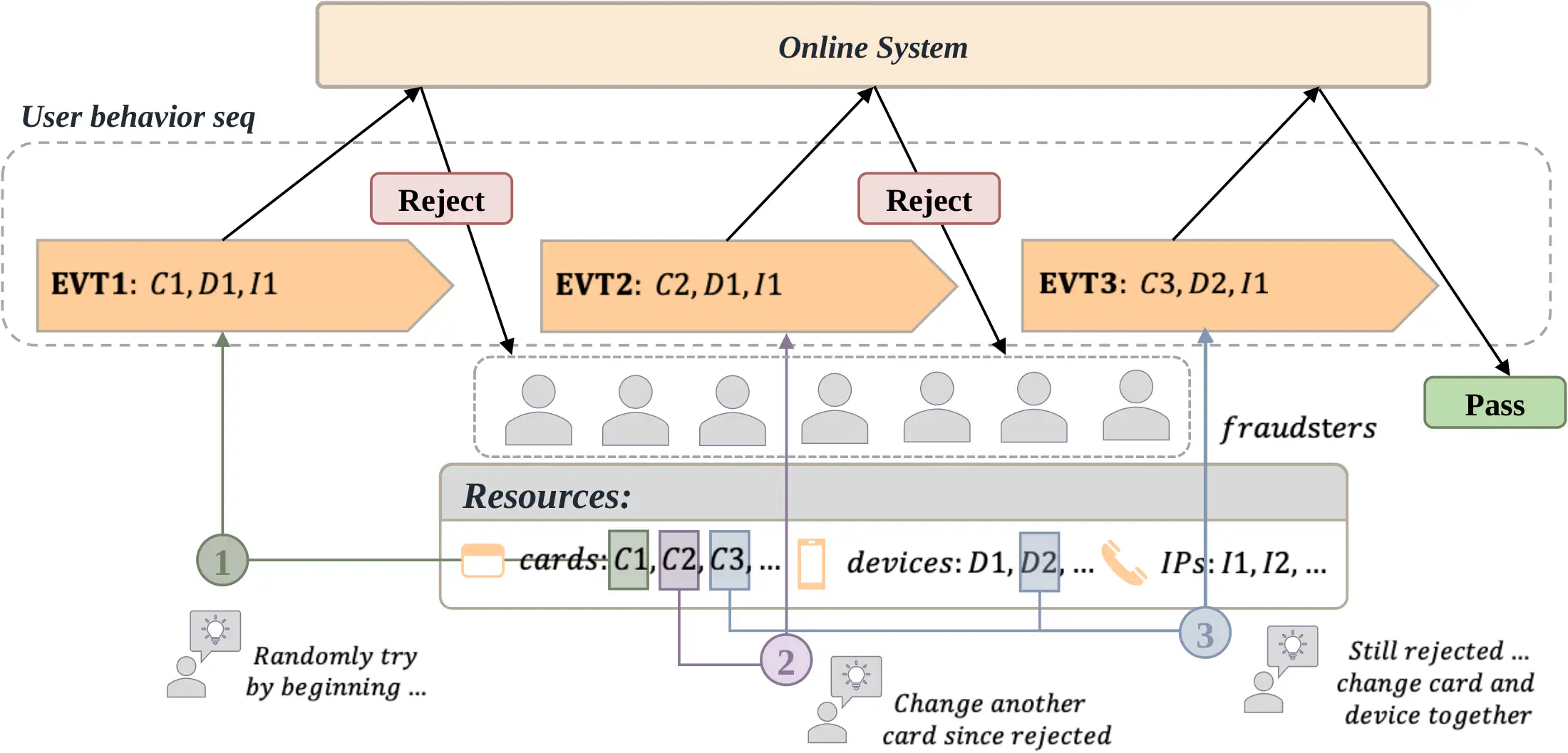
The team gives an example of what it catches. A fraudster's payment is rejected, so they try another card. When that fails, they change card and device, and get through on the third try, 120 seconds after starting. The model learned to group this pattern on its own.
What is actually new
The bigger finding is about new markets. A fraud model usually needs many examples of past fraud before it works well, and a new market doesn't have them.
Here, a model trained on other businesses and then moved to a new one did 34.5% better than the same design built from scratch. With only a quarter of the usual examples, it beat a model trained on all of them. For AlipayHK, which had just 732 known risky payments to learn from, the gain was large.
The same model also raised the share of payments that went through by 2.16%, by choosing a better route for each one.
One caution applies. This is the company's own report on its own system, and it keeps key details, such as the full design and data, private.
What it means for businesses in Indonesia
Fraud is a cost every online seller, bank and wallet carries. If that includes you, Ant International's test suggests two lessons.
First, measure fraud tools fairly. The new model caught more fraud without blocking more payments, so good customers were not paying the price. Second, a single model that learns from all your businesses can help a group with several brands or countries. A new unit can borrow what the others have already learned.
What to do
- Ask your payment provider how much fraud its checks miss and how many good customers they wrongly block. Compare tools only when they block the same share of payments.
- If you run several payment or lending businesses, explore whether they can share what their fraud models learn.
- Before entering a new market, ask how your fraud system will cope with little local history.
- Treat results a vendor reports about itself as a starting point, and test on your own data.