
Databricks' AI can now keep watch over ongoing work, like spotting fraud
Databricks has turned its Genie assistant into an AI coworker that takes on standing jobs, such as watching claims or campaigns, within limits you set. It keeps working on them until you tell it to stop.
The short version
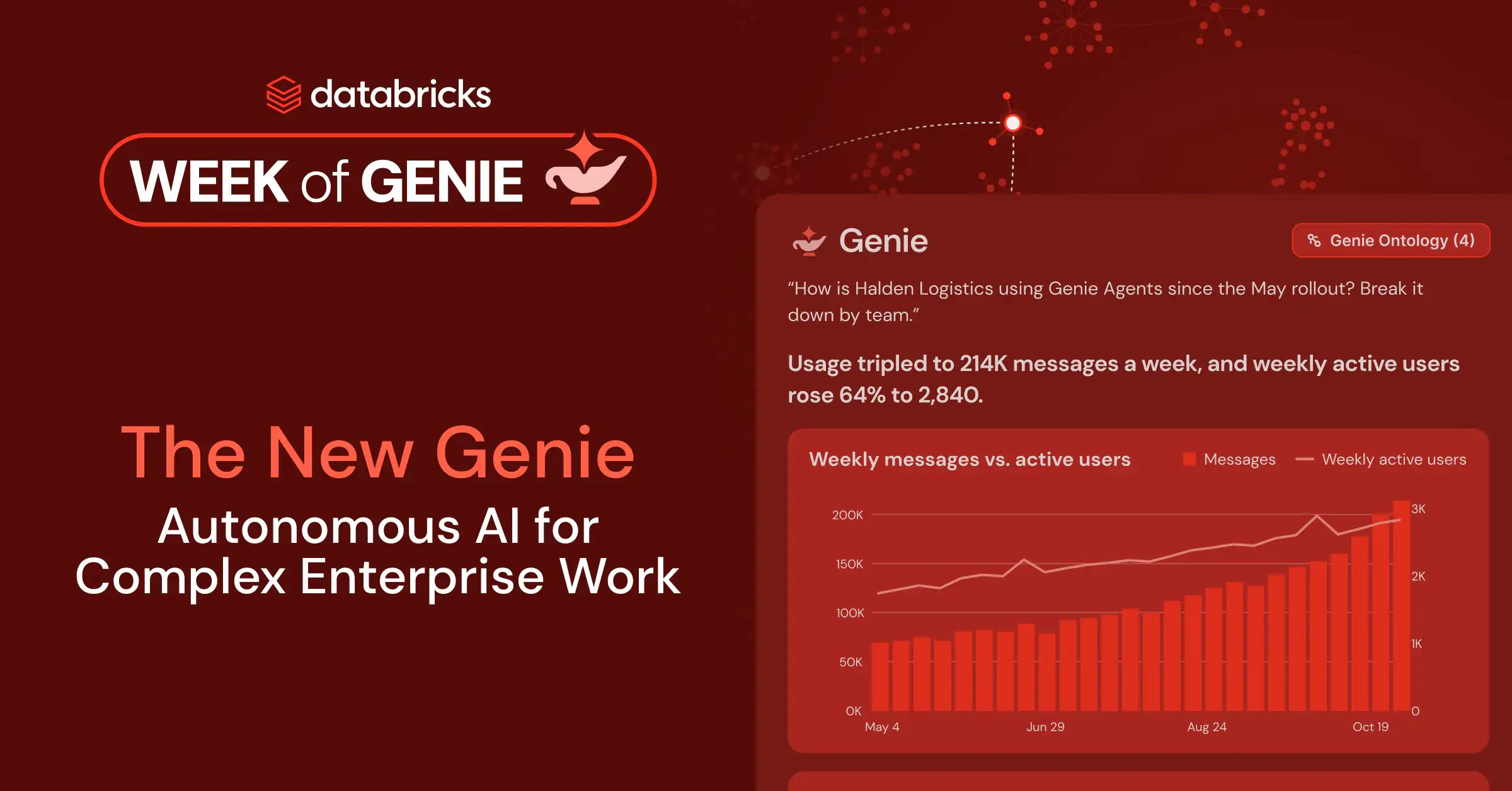
- Databricks has rebuilt Genie, its AI assistant for company data, so it can take on ongoing jobs and keep working on them without being asked again.
- You set the limits. Genie checks in when it needs a decision, and admins can cap what it spends and see every action it takes.
- In a test Databricks ran with the data firm Turing, Genie answered correctly in 91% of tasks. That success rate was 1.6 times that of the better of two rival AI agents.
What Databricks launched
Most AI assistants still work one question at a time. You ask and it answers. Then you go back to managing the work yourself. Databricks says that is the gap it wants to close.
The new Genie works more like a junior colleague with a standing brief. You give it a job and access to the tools it needs. It keeps track of progress and chases missing inputs. When new information arrives, it acts on it.
Databricks gives a few examples. An insurer could have Genie watch incoming claims for signs of fraud. When a group of claims drifts outside the rules, Genie builds the case file and sends it to the underwriters. A marketing team could have it watch campaigns around the clock, look into anything that underperforms and suggest budget changes each week for a person to approve.
A job can run on a schedule or start when something happens. Databricks' examples are a metric that dips, or more than 10 customers asking for the same feature. Genie also notices work you repeat, such as a weekly update, and offers to take it over.
You can reach it by email or inside Slack and Microsoft Teams. It also runs in a browser and on phones. Describe a slide deck or a dashboard, and it can build the finished thing.
What is actually new
Genie One, the earlier version, already helped teams ask questions of their data. Databricks says thousands of customers use Genie today. Unilever and AstraZeneca are among them. The new part is that Genie now owns work over time.
Two pieces make that possible.
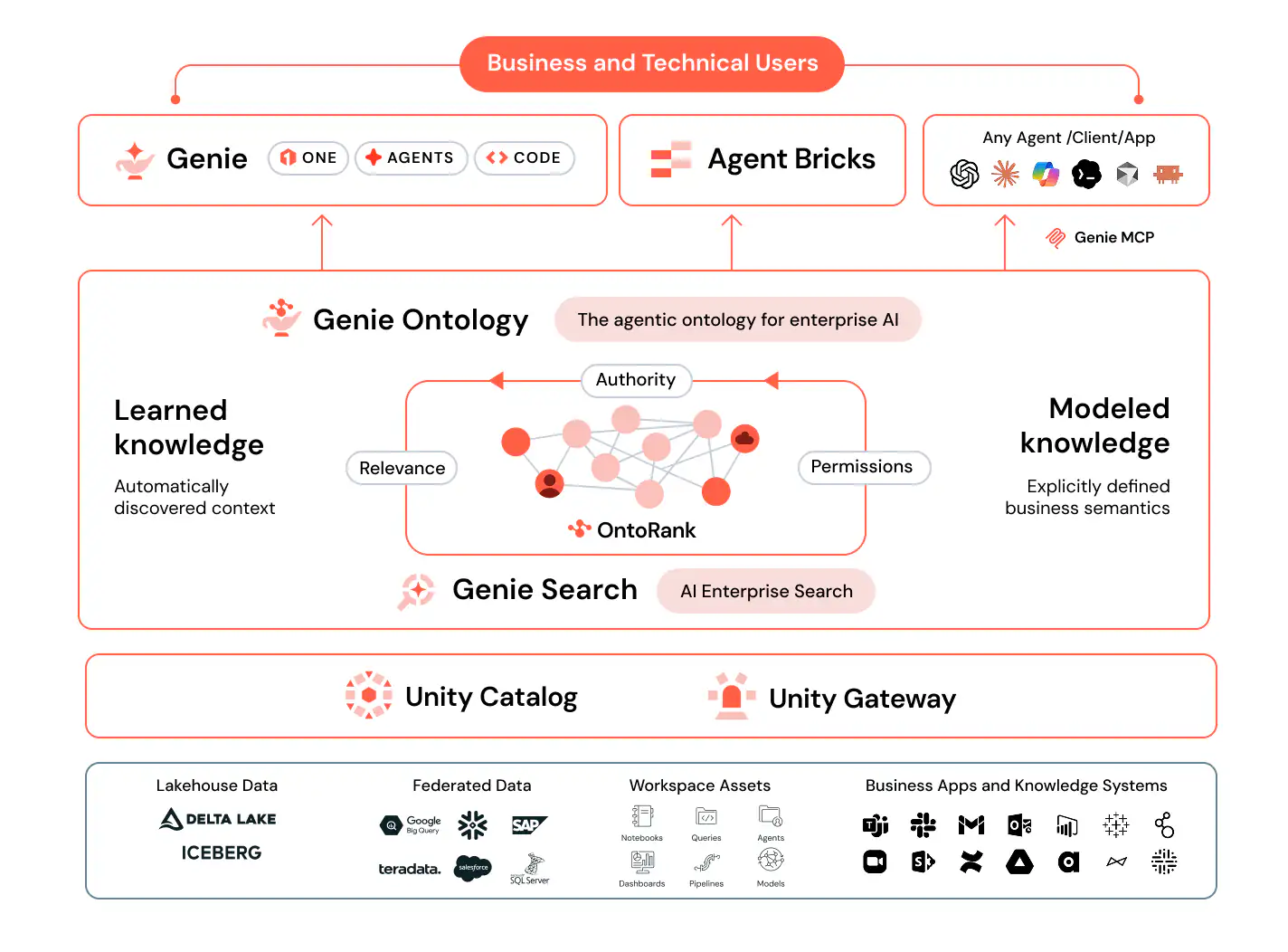
The first is Genie Ontology, now generally available. Think of it as a map of how your business works. It records what counts as an active customer, which revenue figure is the official one and who works with whom. AI agents build most of it on their own by studying the dashboards and reports your staff already use. People then confirm the official definitions, and those take priority.
The second is Genie Search. It looks across company tools like Google Drive and Jira, alongside the data in Databricks. It keeps each tool's access rules, so nobody sees a document in Genie that they could not open in the original app.
Admins get a central control panel. They choose which tools Genie may touch and which actions need a sign-off. They also set how much each person or team may spend. Every action is logged.
Databricks also shared one number on accuracy. It built a new test with the AI data company Turing. Genie then ran against two leading AI agents from other makers on the same tasks. Genie got 91% right while using less than half as much computing. Databricks designed this test, so treat it as a claim until others repeat it.
What it means for companies in Indonesia
If your company already keeps its data in Databricks, you can now hand AI a standing job. Whether you should depends on your own data definitions. Genie is only as good as the business definitions it learns. If finance and sales count revenue in two different ways, an agent will repeat the confusion faster than any analyst.
There is also a cost question. An assistant that works around the clock keeps spending money around the clock. Finance should set the spending caps before the first long-running job starts.
Staff who use ChatGPT or Claude can plug in the same business definitions Genie uses. That helps if different assistants give your team different answers today.
What to do next
- Pick one repeated task, such as a weekly sales update or a fraud watchlist, and test whether Genie can own it end to end.
- Before you start, agree on the official definitions of your most important business metrics, so the business map has something correct to learn from.
- Ask IT to set per-user spending limits and approval rules first, then widen them slowly.
- Check which of your other work tools Genie Search can reach, and confirm their access rules carry over.
- Keep a person approving any action that moves money or changes a customer record, at least for the first few months.