Disney will make on-brand images with AI trained on its own characters
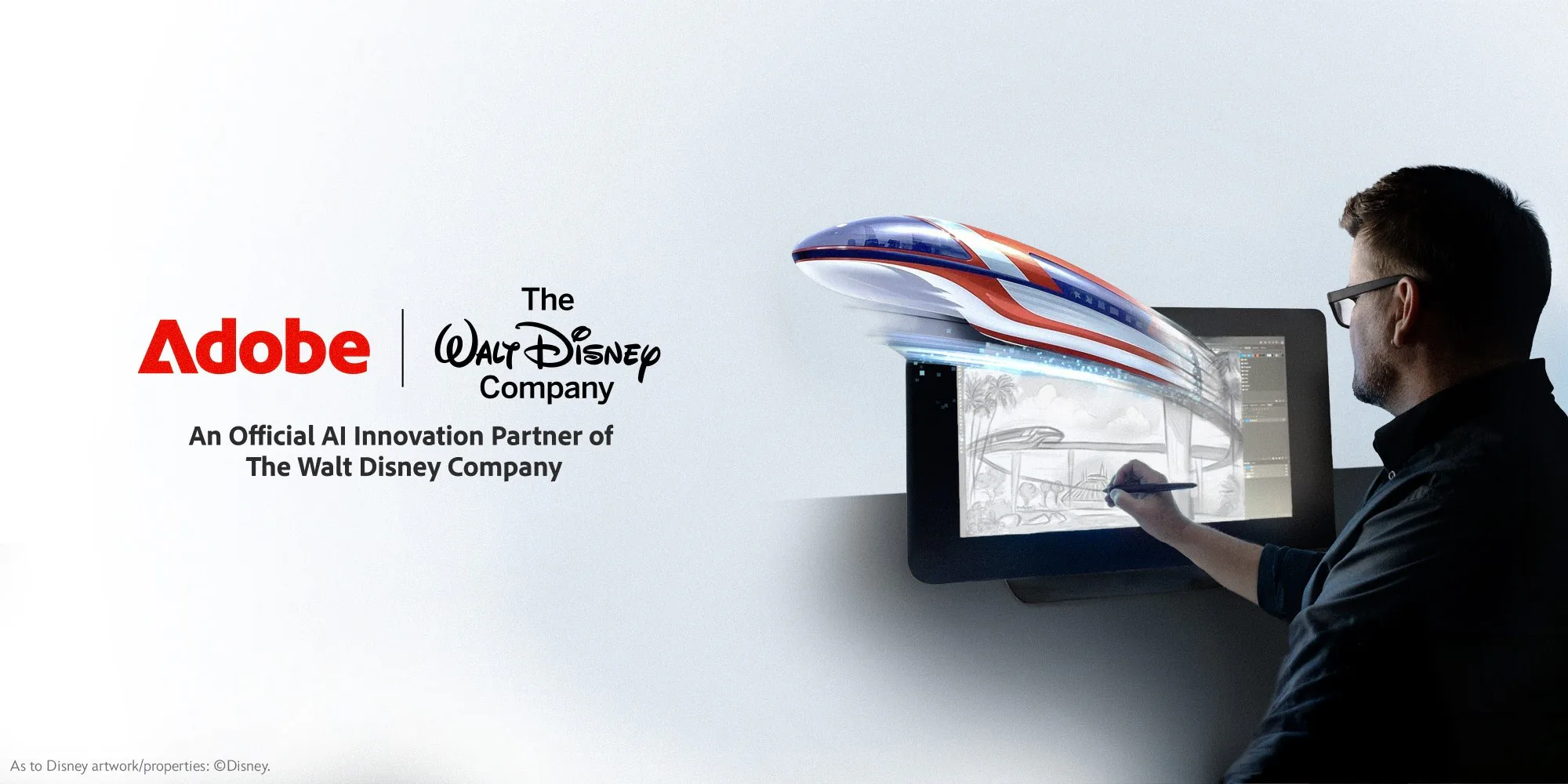
Adobe and Disney announced a multi-year alliance on 9 November. Adobe will build custom image models on Disney's characters and styles, and work with its film studio and ESPN.
The short version
- Adobe and The Walt Disney Company announced a multi-year AI alliance at Adobe MAX on 9 November.
- Adobe will build private AI models for Disney trained on its own characters and styles, which Adobe says are safe to use commercially.
- Disney's theme park designers already use one that turns hand sketches into finished concept art.
What was announced
Adobe becomes Disney's official AI innovation partner. Disney gets early access to Adobe's newest creative and AI tools. It also gets Adobe engineers and researchers working on its production pipeline.
The heart of the deal is Firefly Foundry, Adobe's service for building a company's own AI models. These models learn from one owner's material. For Disney, that means the look of its characters and worlds, so the output can stay on brand.
Disney's Imagineering research team, which designs theme parks, is already using two such models. One turns hand-drawn ideas into fully rendered 2D concept art. Another makes on-brand images that stay accurate to each franchise.
The alliance also reaches two of Disney's innovation labs. Adobe joins StudioLAB, the film studio's lab for testing new tools. With ESPN, it will look for ways to use AI for sports fans and for ESPN's archive.
There is a marketing side as well. Adobe will appear across Disney's media platforms and in joint campaigns and events. No money terms were given.
Both companies stress that people stay in charge. Adobe calls the models human-centered and artist-led. Disney says the goal is to give its creative teams new ways to explore and develop ideas.
What is actually new
Disney's park designers started working with Firefly Foundry in June. This deal widens that from one research team to the wider company, over several years.
It also shows where big brands are heading with AI images. For this work, Disney is choosing models trained on its own material over general tools. In June, Adobe said models trained on material scraped from the internet give no guarantees on brand consistency or where their output comes from.
The June plan also included a third step: turning 2D drawings into detailed 3D prototypes. That would let designers plan builds and estimate materials long before construction starts.
What it means for brands in Indonesia
Many Indonesian brands own a mascot or a strong visual style. The same approach is open to them: a private model that learns mainly from your brand's own material.
Adobe's pitch is that a model built on your own licensed material gives you more control over where its output comes from. That is a different promise from general image tools.
The draw is speed with fewer rights worries. Teams can explore ideas and draft campaign visuals faster, while the model stays inside material you own.
The hard part is knowing which of your images you actually hold the rights to. It also means deciding who reviews what the model makes.
What to do next
- Audit your brand assets and check which ones you fully own and can use to train a model.
- Pick one narrow use first, such as turning sketches into concept art, before wider campaign work.
- Set review rules so a person signs off on every AI-made asset before it goes public.
- Ask any outside partner who would own the model and who checks its output.