
Facebook users can now type topics to block, which can cut your reach
Meta's new "Your algorithm" page lets people add or block topics in their own words, and the change reaches Feed and Reels quickly. For brands, a blocked topic now works like a filter on reach.

The short version
- Meta has built "Your algorithm", a Facebook page where people list the topics they want more of, or less of, in their own words.
- Changes apply to both Feed and Reels. Meta added extra steps so they take effect quickly, even for posts already loaded on the phone.
- For brands, a person's "Not Interested In" list now acts like a filter. Posts on a blocked topic get pushed down or removed. So do posts from a creator the person names.
What Meta built
Facebook's recommendations have long learned from behavior: what you watch and what you scroll past. Meta's engineers say that approach works at huge scale. They also say it adapts slowly and misses nuance. "Your algorithm" adds a second signal, which is what people say they want.
The page opens with a one-sentence "Lately Summary" of what you have been watching. Below it sit two lists. "Interested In" starts filled with topics that an AI model guessed from your past viewing. "Not Interested In" holds topics you have hidden or marked as unwanted. You can type a new topic in your own words. You can also move a topic between the lists or delete it.
Meta's engineering post, published on 10 November, explains how the system works. It does not say which countries have the page yet.
How a typed interest changes the feed
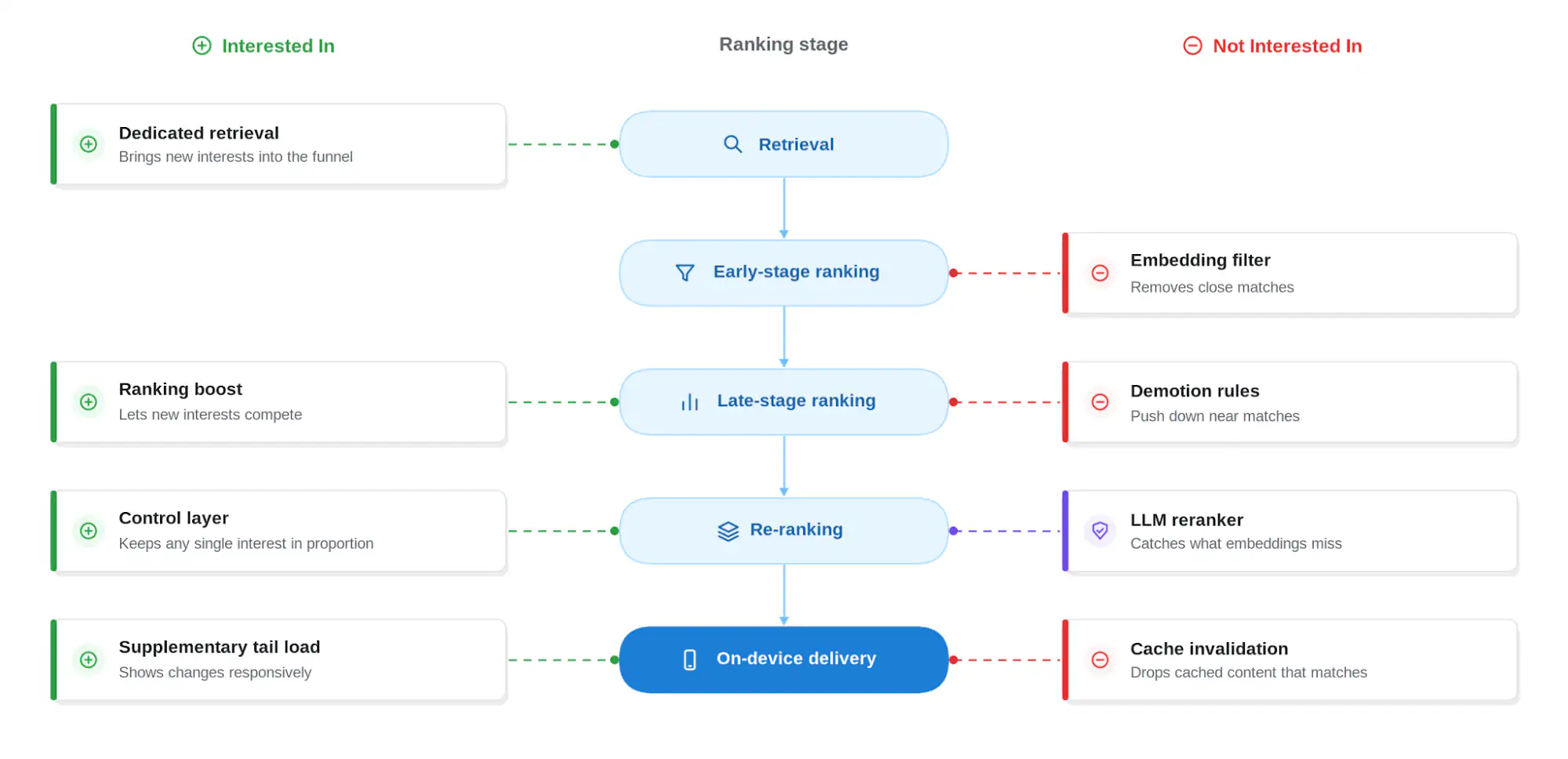
Each new interest gets its own search for matching posts. Without that, Meta says, posts on a brand-new interest might never be considered for your feed at all. Posts that are a good match then get a boost, so they can compete with everything else.
Meta is careful not to let one interest flood the feed. It spaces those posts out and caps each interest's share every day. In Meta's words, a new interest should "show up, not take over". New interests get extra weight for a limited time. After that, the system goes back to learning from how you engage.
The "Not Interested In" list is enforced at several stages. Close matches are removed during ranking, and near matches are pushed down. Then a small AI model, trained for this one job, checks the final list and removes anything it judges related. When you block a topic, the app also drops matching posts already stored on your phone.
Two details matter for marketers. Some requests are about quality, such as less AI-generated content, and Meta handles those with separate rules. And if a person names a creator, that creator's posts are filtered out directly.
What it means for brands
Reach on Facebook used to depend almost entirely on behavior. Now some people will also tell Meta, in words, what they never want to see. If your post falls under a topic someone has blocked, it can drop out of their feed, however much they engaged with you before.
The other side is good news. When someone types an interest that matches your category, Meta goes looking for posts on it. Content that is plainly about one clear topic is likely easier to match. Vague posts that try to cover everything give the matching step less to work with.
The quality rule deserves attention. Many brands now use AI to make social content at volume. If people ask Facebook for less AI-generated content, those posts may reach fewer of them. Meta does not say how it decides what counts as AI-generated.
Facebook and its Reels remain big channels for Indonesian brands. The page's arrival in Indonesia has not been announced, so treat this as a signal of direction.
What to do
- Ask your social team to check whether "Your algorithm" appears on their own accounts, and note how topics are named there.
- Make each post clearly about one topic your audience would type in their own words.
- Track reach for AI-made posts separately from posts you filmed or photographed, since people can now ask for less AI-generated content.
- Watch for sudden reach drops on posts tied to broad topics people might block.
- Build channels you own alongside social reach, such as your website and your own customer lists.