
Google's AI agents rewrote 800,000 lines of old code into a safer language
Google's Antigravity coding tool now runs teams of AI agents that check each other's work. Google used it to move old software to safer code, and some of it got faster.
The short version
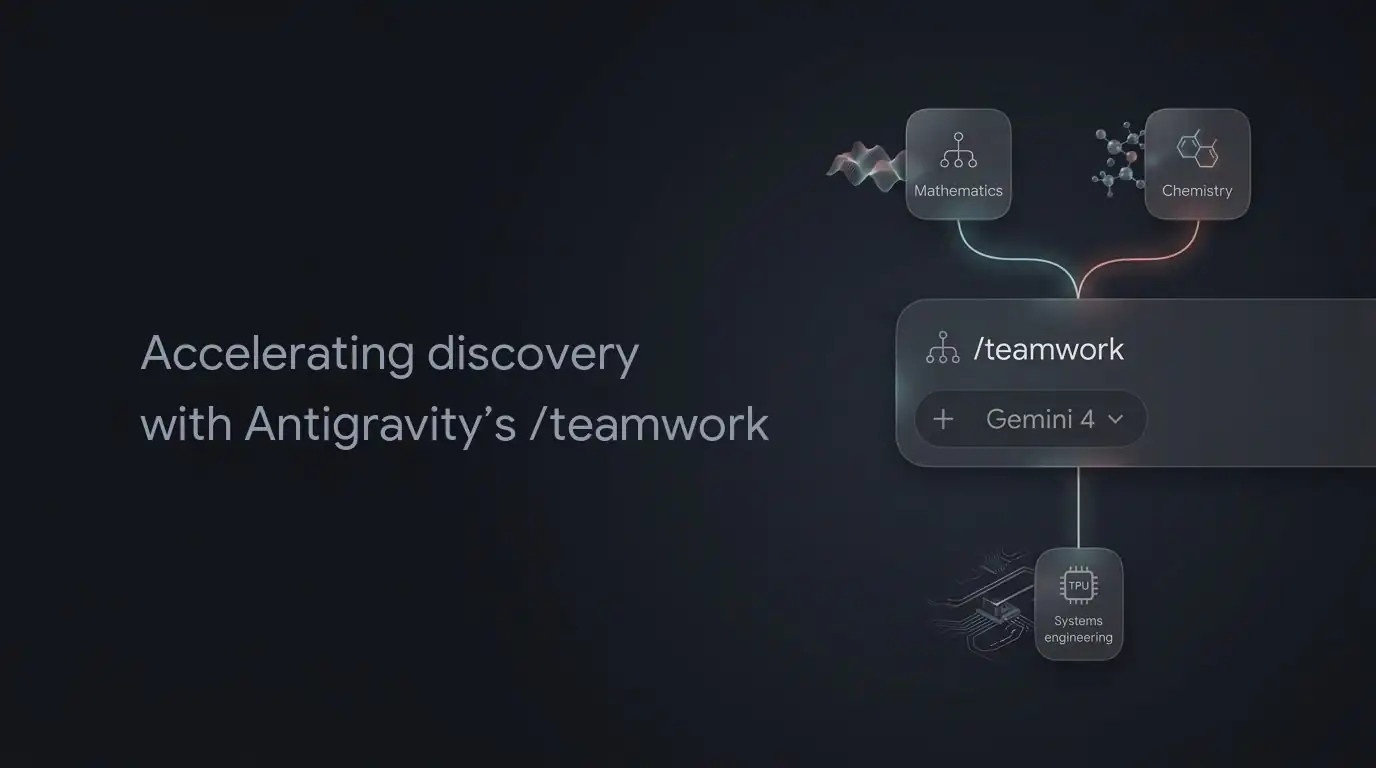
- Google has shared results from /teamwork, a feature of its Antigravity coding tool. It runs teams of AI agents, each with a narrow job, while other agents check their work.
- In 2 weeks it finished moving Zircon, a small operating system core, into a newer language called Rust. Rust is built to prevent memory errors, a common source of security holes.
- The new code adds about 800,000 lines and passes all the original tests. Outside developers can use the tool now.
How /teamwork works
Google says two weaknesses of today's AI models shaped the design.
First, a single attempt often fails. So /teamwork runs many attempts side by side. Strict checkers then decide which attempts work. Those checkers include the original software's own tests, left unchanged.
Second, AI models lose track of details on tasks that run for days. So each agent gets only the files and tools it needs for its step. Separate critic agents then review the result from a clean start. They don't see how it was made.
Google also names a common failure in big code moves. AI agents tend to fake the missing parts. Or they change the tests so a broken version passes. Google's fix was to move each part only after the parts it depends on already work. Every part is then tested against the original tests, unchanged.
What Google says it achieved
- An operating system core. An earlier effort had moved 25% of Zircon into Rust. A two-week run finished the rest. The new version passes every test for the core and starts up on real hardware.
- A video decoder. Google moved the software that plays its AV1 video format into about 170 thousand lines of Rust. Its output matches the original exactly across a broad set of tests.
- Then it got faster. The new decoder started out about 4x slower. Then the agents got speed-measuring tools and a goal to go faster. It ended up 20 to 30% faster than the original.
- Inside Google. The same agents found memory savings across Google's computers. They also helped cut interruptions to some of its AI computing jobs by 24%.
Most of Google's post covers math and science, where the agents helped prove results that had been open for years. Google also checked those proofs with software that verifies every logical step.
What it means for companies in Indonesia
Many banks, telcos and factories still run on old software that few of their staff understand. Moving it to modern code is slow and risky, so it often never happens.
Google's results suggest AI can now carry much of that work. The condition is a strong set of automated tests that decides what counts as done. Without such tests, an AI rewrite is hard to trust.
The checking is what made Google's results believable. Each agent's work was tested by another agent or by the original tests. That design is worth copying even if you never use Google's tool.
These are Google's own results, on Google's own code, by the teams that built the tool. Your older systems may lack the tests that made this possible. Writing those tests may be the first project.
What to do next
- List the old systems your business depends on, and who still understands each one.
- Check how much of each system automated tests cover. That is the first thing an AI-led rewrite needs.
- Start with a small, well-tested part. Judge the result against the original tests, unchanged.
- Keep engineers reviewing what the agents change, as Google's teams did.
- Developers can try /teamwork and its everyday version, /boost, in Antigravity today.