
Google's new AI gives fast yes-or-no verdicts on photos and documents
Google's new service, Gemini Decisions, answers up to 1,000 short questions about one file at once, with a confidence score for each. It makes checking every item, instead of a sample, much cheaper.
The short version
- Google has launched Gemini Decisions, a service that answers up to 1,000 short questions about one file in a single pass.
- The file can be text or a PDF. It can also be a photo, a recording or a video. Each answer comes with a confidence score, so unclear cases can go to a person.
- Google says it costs about a fifth of its next-cheapest option on the same tests. You pay only for what goes in, and nothing for the answers.
What Google launched
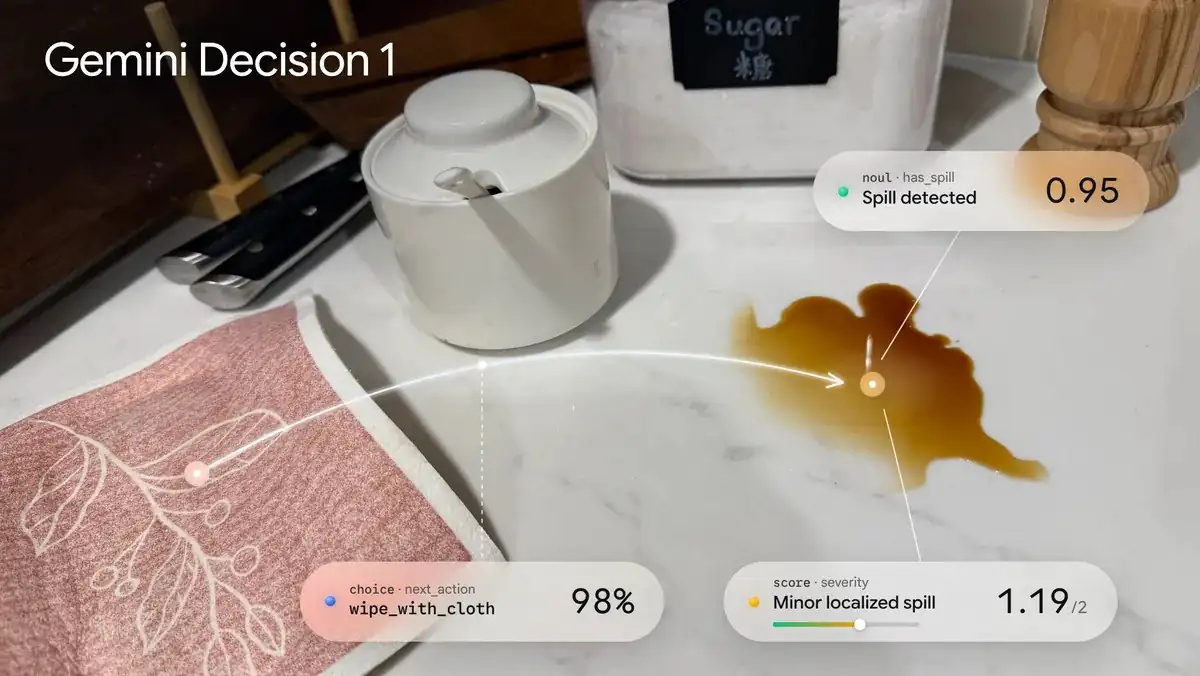
Most AI tools write an answer word by word. That suits drafting. It is slow and costly when all you need is a quick verdict. Is there a spill on this counter? Does this ad break our rules? Which team should handle this complaint?
Gemini Decisions is built for those small calls. You hand it one input and a list of questions. It returns the answers in about a quarter of a second, usually 150 to 250 milliseconds.
It handles three kinds of question:
- Yes or no. How likely it is that a condition holds.
- Multiple choice. Which of up to 255 options fits best, with odds for each.
- Rating. A score on a scale you define, such as how severe a problem is.
Every answer carries a confidence score from 0 to 1. Your system can then decide what to do with a shaky answer, such as sending it to a human reviewer.
You can mix kinds of input in one request. Google's examples pair a call recording with account details, or a scanned insurance claim with photos of the damage.
What is actually new
Until now, a company that wanted quick checks like these had two options. It could train its own narrow model for each task. That takes time and lots of examples. Or it could use a general chatbot. Those write long replies and bill for every word.
Gemini Decisions skips the writing. Google charges by the amount of material you send in, at $0.10 per million small chunks of text. The answers are free. The shared file is billed once, however many questions you ask about it.
Google is already using it in its own products. Gemini Notebook uses it to send each question to the right-sized model. That cut waiting time for everyday questions by up to 40%. A Google Labs app uses it to pick the right emoji from more than 200 in a split second. Google Search uses it as a safety check that spots attempts to misuse its AI tools.
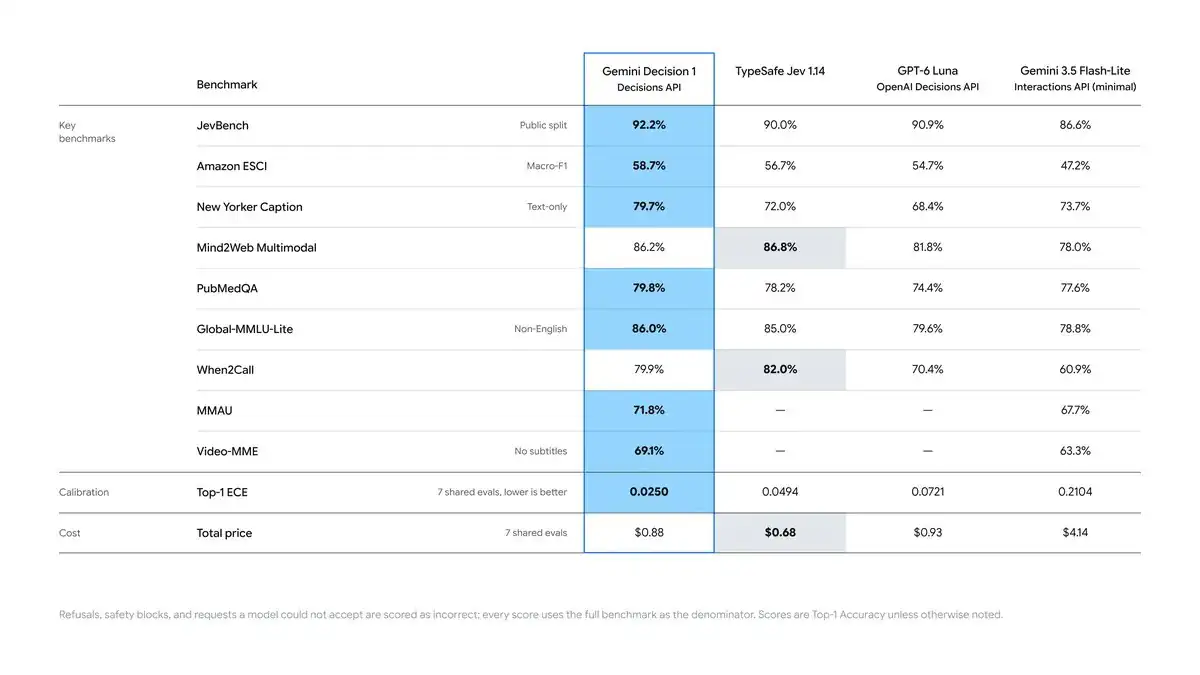
Google also reports that the model beat the alternatives it compared against on its own test suite, with the most reliable confidence scores. Google ran those tests itself.
What it means for companies in Indonesia
Many everyday business checks are small decisions made at high volume. Think of a marketplace screening product photos, or a bank sorting customer messages by topic. An insurer might triage claims by how serious the damage looks. A brand might check whether a creator's video meets its rules before it goes live.
Today much of that work is done by people, or by older systems that only read text. This service can look at a photo or listen to a call and answer dozens of questions at once. At that price, checking every item instead of a sample becomes affordable.
The confidence score is the useful part for managers. It lets you decide where the line sits between "the machine can handle it" and "a person must look." You can start strict and loosen it as you see results.
Two cautions. The service is new, and Google's comparisons are its own. For now it is offered through Google AI Studio. Google says it is coming to Gemini in Google Cloud later, which matters for companies that must keep data under their own cloud contracts.
What to do next
- List three checks your team repeats thousands of times a month. Photo review and message sorting are good candidates.
- Test one of them on a sample of past cases where you already know the right answer.
- Set the confidence level below which a person always reviews, and track how often that happens.
- Ask your data team where the files would be processed before you send customer data.