
Indonesia's offices will share records so you stop filling the same forms
Under the One Data law, government systems will share checked records with each other while each agency keeps its own. Firms that connect to government systems may face shared standards on definitions, access and tracking.
The short version
- Indonesia's One Data law, UU Satu Data Indonesia, aims to stop citizens handing the same documents to office after office.
- Government systems will share checked data with each other under common standards. Each agency still keeps and looks after its own data.
- Firms that build or run government systems should expect common standards. These cover shared definitions, who may see data, and records of who used it.
What the minister said
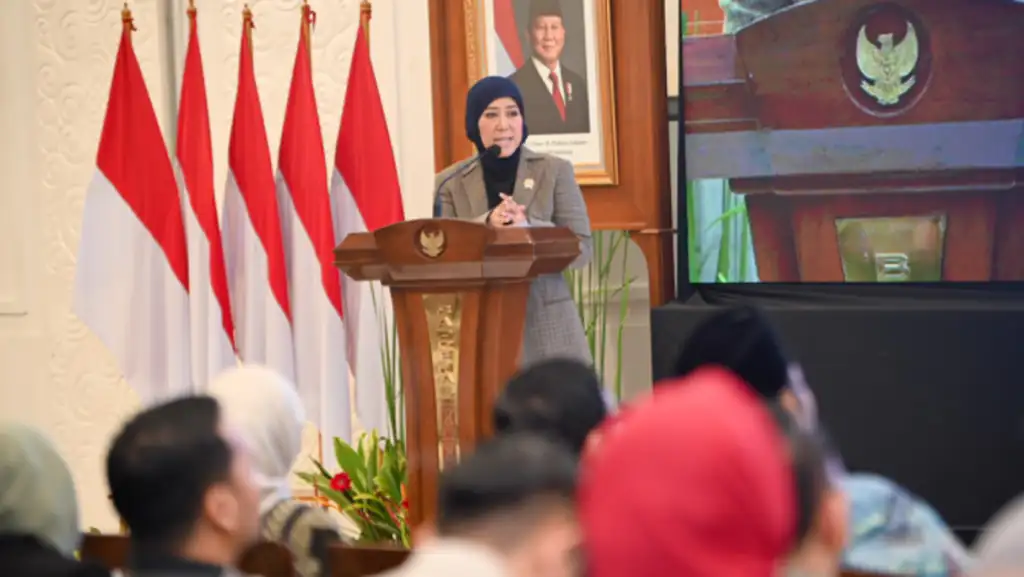
Meutya Hafid, the Minister of Communication and Digital Affairs, spoke on 5 November at a briefing on the new law at Bappenas, the national planning ministry in Jakarta. Her ministry, Komdigi, published her remarks.
Her message was simple. People should not have to keep visiting different offices and filling in the same forms. Once one agency holds verified data, other agencies should be able to reuse it lawfully. That saves citizens time and effort.
She said Komdigi's main job is connecting government computer systems so they can talk to each other.
How it is meant to work
The law makes "interoperability" the main condition. That means different systems can connect and swap data because they follow the same standards.
Meutya listed what those standards must cover:
- the same definitions for the same things;
- shared rules for describing data, and common reference codes;
- security and control over who can access what;
- a record of every use, so each use of data can be traced and accounted for.
Komdigi is building a link between government services to carry this traffic. It runs on two pieces of national infrastructure: the National Data Center and the government's own internal network.
What does not change
The law does not put all data in one place. Meutya stressed a principle she called "data remains at source". Each ministry and agency stays responsible for the quality of its own data. It keeps that data current and correct. Sharing works because the systems can talk to each other. No agency takes over another's data.
Each agency must also name the person responsible for its data. It must make clear whether it controls the personal data it holds or only processes it for someone else. Those roles are also set out in Indonesia's personal data protection law, UU PDP.
The minister said the One Data law has to fit with that law and with the electronic information and transactions law, UU ITE. Easier sharing must not weaken privacy or data sovereignty, meaning the state's control over its citizens' data. In practice, she said, that means clear access rights and limits on what data may be used for. It also needs secure infrastructure and proper oversight.
She also set the test for success. The law will be judged by whether people find public services easier and feel a real benefit.
What it means for companies in Indonesia
Many firms already exchange data with government systems, from banks to telcos. They check customers' identities and file reports and permits. As agencies adopt shared standards, the systems that connect to them are likely to need to follow the same definitions and access rules.
For technology vendors, these standards point to what future government projects will ask for. Expect requirements to connect under the common standards and to log every use of data.
What to do next
- Map where your systems exchange data with government agencies today.
- Check that your own data definitions are written down and consistent across teams.
- Make sure you can show who accessed personal data and for what purpose.
- Name an owner for each important data set, and record whether you are its controller or processor under UU PDP.
- Watch for the technical standards Komdigi and Bappenas publish under the One Data law.