
Korea's GS Caltex now gets new AI models running in hours, not a week
The energy and chemical company lets plant engineers build prediction models without code, then hands them to its data team automatically.
The short version
- GS Caltex is a South Korean energy and chemical company. It lets its process engineers build AI prediction models without writing code.
- It automated the handover to its machine learning team. A new model now goes into daily use within a few hours, compared with about a week before.
- The models run in batches every 30 minutes. The company says that has noticeably cut what it pays to run them.
What GS Caltex built
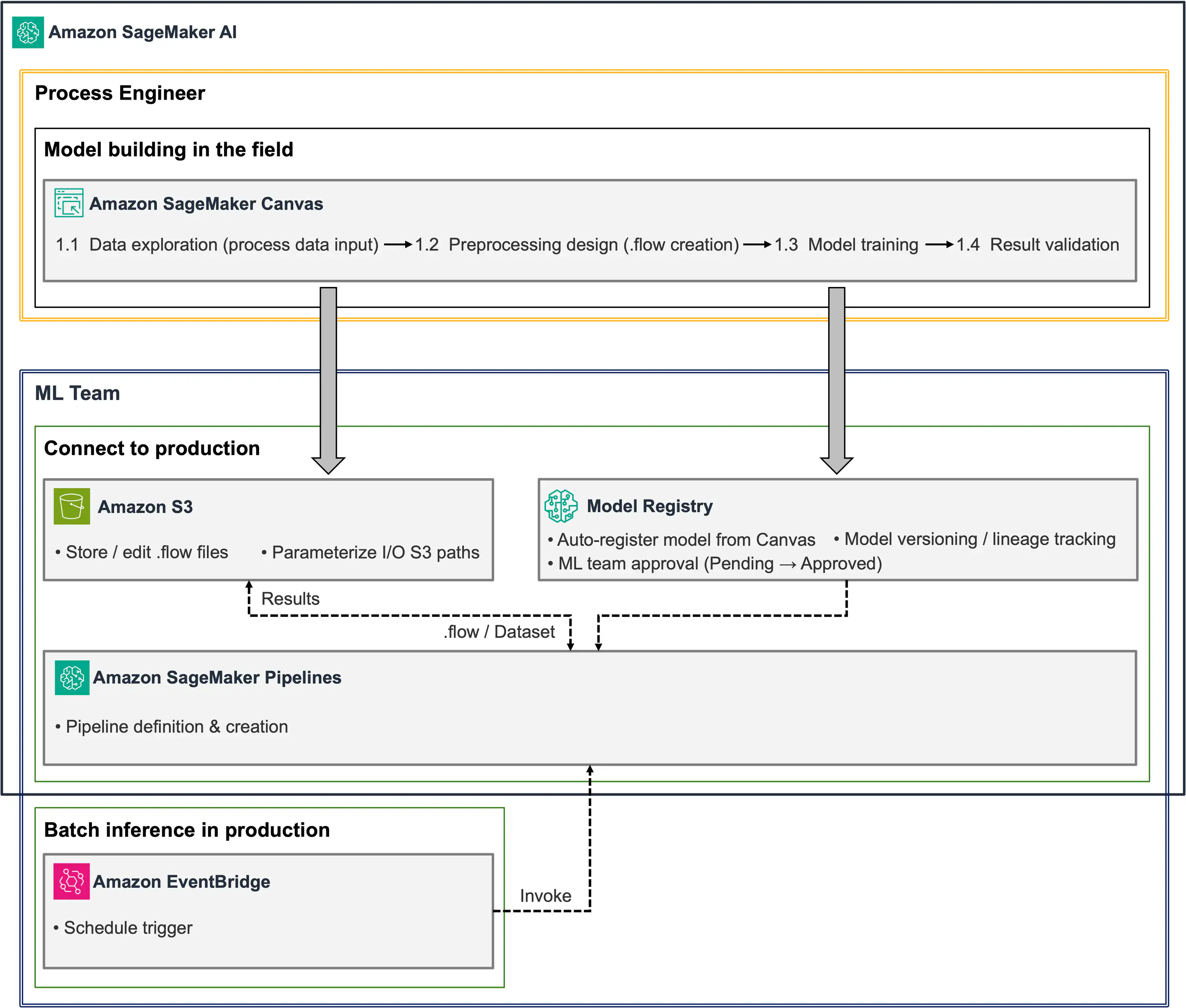
The company splits model work between two groups. Process engineers know the plant and its data. They can judge whether a prediction is useful. Machine learning engineers know how to run models reliably and keep track of each version.
The engineers build and test their models in Amazon SageMaker Canvas, a tool that needs no coding. Before this project, moving a model from there into daily use took real work. The machine learning team had to tell each model where to find its data. It also had to link the data cleaning and prediction steps by hand.
GS Caltex automated that handover. It reuses exactly what the engineers built, so nothing is rebuilt from scratch. AWS described the setup in a blog post written with GS Caltex staff.
How it works now
- The engineer builds. A process engineer prepares the data and designs the cleaning steps. Then the engineer trains a model in Canvas and checks the results.
- The data team approves. The system records each model and its versions. A machine learning engineer reviews the model's data and results, then approves it.
- A schedule runs it. Every 30 minutes, an automatic process starts. It cleans the latest data the same way the engineer did. Then it runs the predictions and stores the results.
Running in batches means no computer has to stay switched on waiting for requests. That is where GS Caltex says the cost saving comes from.
The post also warns about one common mistake. A model must handle new data exactly as it did in testing. If those steps drift, its predictions get worse.
Why the split matters
Most of the work in a prediction model is knowing the process. Process engineers have that knowledge. They know which readings matter and which results make sense.
Data teams have a different skill. They make sure a model runs on time, every time, and that someone can trace what changed. GS Caltex lets each group do its own part. The software carries the work from one to the other.
What it means for industry in Indonesia
Indonesian refineries and smelters have the same two groups, and so do plantations and factories. Engineers understand the process but rarely write code. Data teams can code but rarely know the process. Good models can stall in the gap between them.
The GS Caltex setup closes that gap without turning engineers into programmers. An approval step keeps a named person responsible for each model that goes live.
The figures come from GS Caltex, through AWS. The post gives no number for the cost saving. AWS calls it part 1, so more detail may follow.
What to do next
- Find models your engineers built that never left a laptop or a spreadsheet.
- Ask your data team how long it takes to put one model into daily use, and what slows it down.
- Decide how often each prediction really needs refreshing. A fixed schedule can cost less than a system that is always on.
- Set an approval step, with a named reviewer, before any model goes live.
- Keep the engineer's data cleaning steps identical between testing and daily use.