
Malaysia's U Mobile cut support tickets by up to 84.5% using AI helpers
U Mobile built a team of AI helpers that find the cause of a customer's problem across its systems and propose the fix. Staff approve each change before it happens.

The short version
- U Mobile, Malaysia's newest 5G network, built a team of 8 AI helpers that investigate customer problems across its many systems.
- Between January and September 2026, its monthly tickets for network and setup problems fell 84.5%, by the company's own measurements.
- A person still approves every change to a live customer account, and that design choice is worth copying.
What U Mobile built
When a customer can't buy a data add-on, the answer is rarely in one place. A support worker has to check error logs, then the billing system, then the company's own rules. Each check is a different screen. If the worker gets stuck, the ticket goes to the IT team and the customer waits.
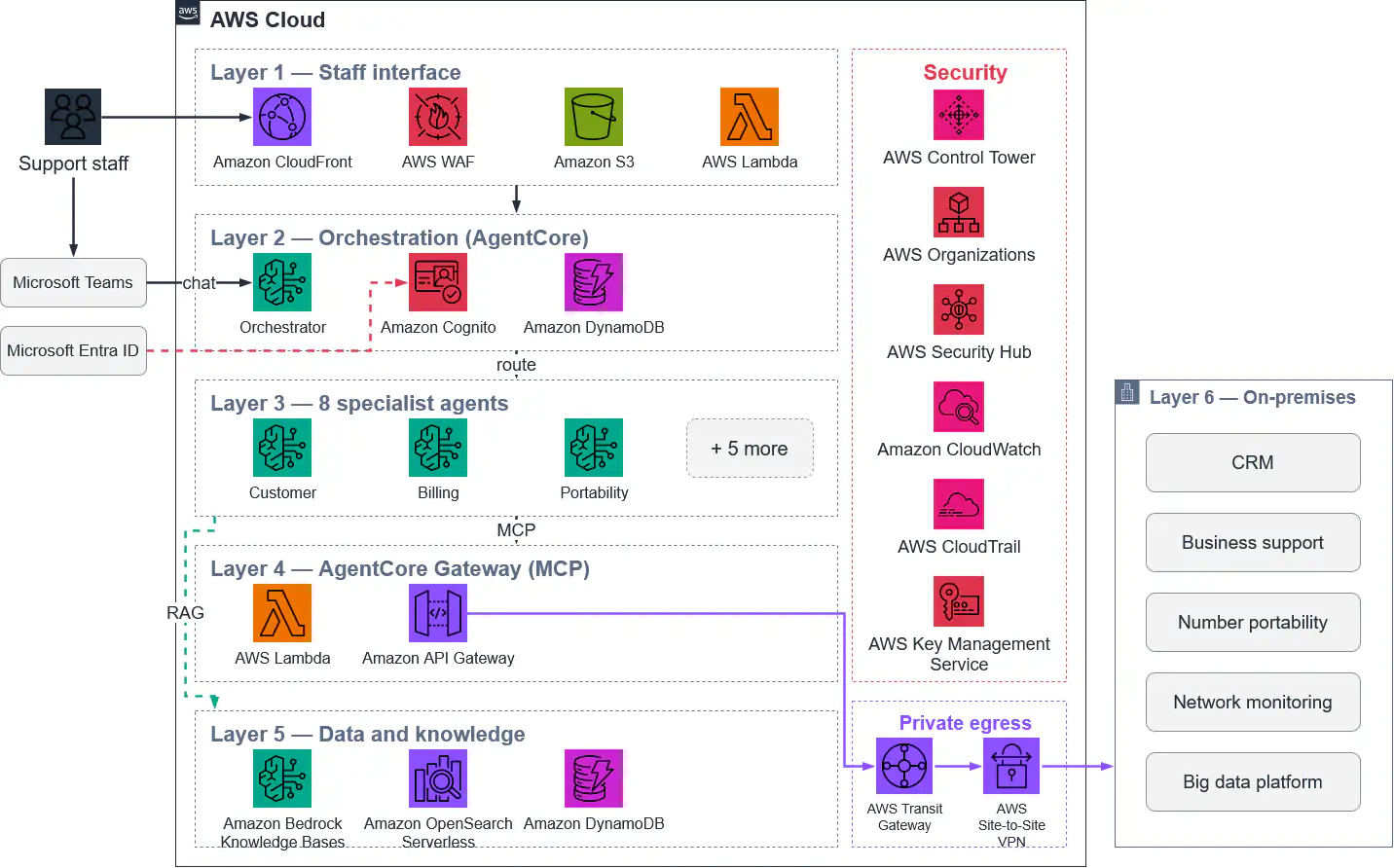
U Mobile's IT division built a system called AiDaH to do that legwork. It was described this week in a post on Amazon's cloud blog. Staff type a question into Microsoft Teams, which they already use every day. AiDaH then sends it to the right specialist.
There are 8 specialists, each an AI agent: software that can look things up and take steps on its own. One knows customer records. Others cover orders and SIM cards, moving numbers between networks, network monitoring, data analysis, cloud costs and finance. They can hand work to each other when a question crosses systems.
In one real case, a customer couldn't buy an add-on. AiDaH found the cause: an old order was still pending. It also found the customer had tried the same purchase more than 30 times over three days. It showed the cause and the steps to fix it in one reply.
What is actually new
Many companies now use AI to draft replies. U Mobile's system goes further. It checks the customer's settings and finds the point of failure. Then it proposes a fix, such as which service to reset or whether the network team needs a ticket.
The support worker reviews the plan and confirms it. Only then does anything change on the customer's account. U Mobile kept the human decision at exactly that point.
The company also kept costs down. About 70% of requests are matched by simple keywords, with no AI model involved. A small, cheap AI sorts another 20%. Only 10% need the full system.
The results, from U Mobile's own measurements over January to September 2026:
- tickets for setup and network problems fell 84.5%;
- general questions fell 81.6%;
- billing and charging tickets fell 48.7%.
Staff rated the system 4.6 out of 5 for ease of use. It is now part of the standard procedures for the team that handles harder support cases.
What it means for companies in Indonesia
Indonesian telcos and banks have the same problem, and so do insurers. Customer data sits in many systems, often a mix of old servers and cloud. Every question means opening several screens.
U Mobile's path is a useful model because it started small. It began in late 2025 with 2 trial helpers. Early 2026 brought 4 helpers and 20 known problem types. It reached 150 documented problem types within a year. It also gave staff ready-made question templates, so nobody had to guess how to ask.
Security came first. Every action traces back to one named staff member. A helper can only see the systems that person is allowed to see. Sensitive customer details are hidden before the AI reads them. U Mobile also says it is working to comply with Malaysia's personal data law. Indonesia's data protection law asks for the same care.
What to do next
- Pick one support question that today needs three or more systems to answer, and map each step.
- Start with a small trial, like U Mobile's first 2 helpers, before connecting more systems.
- Keep a person's approval at the moment anything changes on a customer account.
- Send simple, repeated requests down a cheap path, and save the full AI for hard cases.
- Hide personal data before the AI sees it, and log every action against a named employee.
- Measure ticket volumes by category before you start, so you can show what changed.