
NVIDIA's AI factory manager traces a faulty circuit board to its cause
NVIDIA has published a blueprint for an AI manager that checks defects on a factory line and works out why they happened. It can run entirely inside the factory, and operators still approve what matters.
The short version
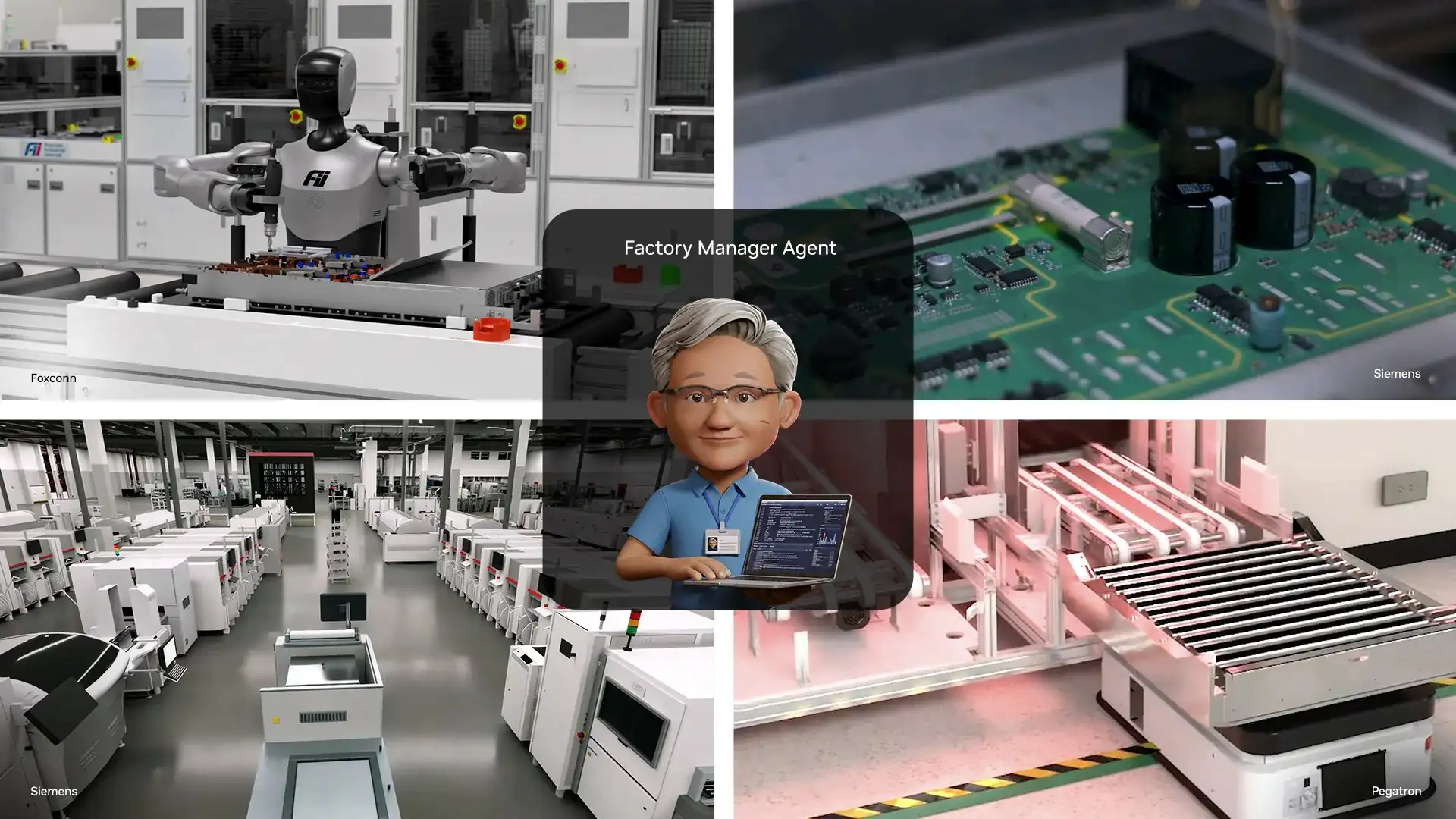
- NVIDIA released a blueprint, called FOX, for an AI "factory manager" that connects a plant's existing systems and directs specialist AI helpers.
- In NVIDIA's example, the AI checks a suspected faulty circuit board and sends it for repair. Then it writes a report on the likely cause.
- It can run on one machine inside the factory, so production data never has to leave the site.
What NVIDIA released
When a machine on a production line flags a defect, someone has to chase the evidence. They pull records from several systems and ask specialists. Then they decide what to do next. That takes time while the line keeps running.
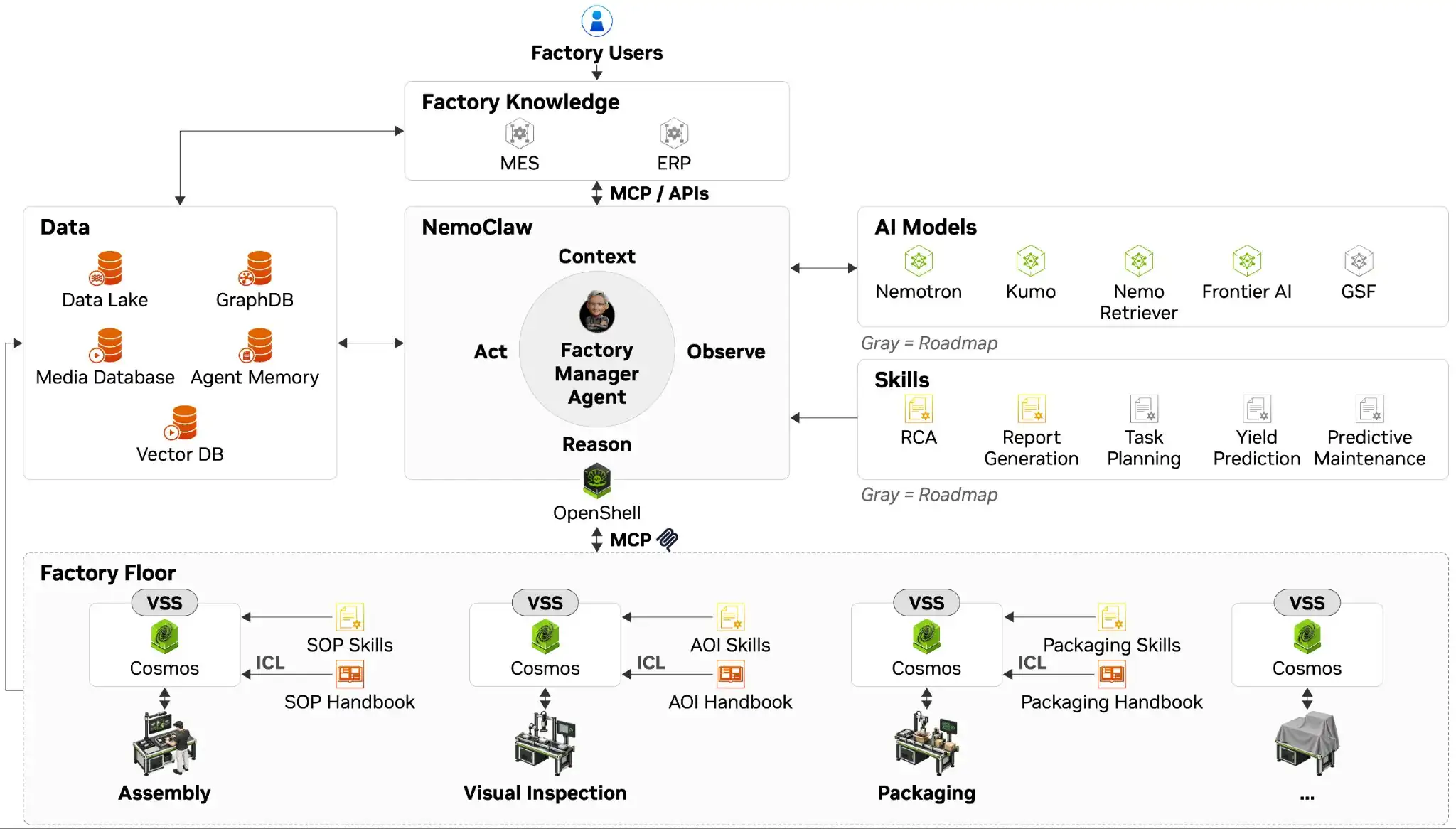
NVIDIA's Factory Operations Blueprint, or FOX, is a starting design for handing that legwork to AI. A company plugs in its own machine records and factory software, plus its manuals. It then sets up specialist AI helpers and decides which steps need an operator's approval.
The manager is an AI that plans the work and hands out tasks. Companies can pick a top paid AI model or a free one, depending on where the data must stay. Strict rules limit which files the system may open and where on the network it may connect.
How it handles a faulty board
NVIDIA's worked example is a line that builds printed circuit boards, the green boards inside most electronics. A board passes through several stations. They apply solder, place the parts and melt the solder. A camera then inspects the result.
Say a camera at the inspection station flags a possible bad solder joint. Many such alarms are false. So the manager asks a visual inspection helper for a second look. That helper compares the board's photo with the factory's own handbook and approved examples.
If the defect is real, a second helper arranges for a robot to move the board to rework. NVIDIA shows this step only in a computer simulation. A real factory has to connect its own robots, and NVIDIA says early setups should ask an operator first.
A third helper then looks for the cause. It pulls the board's history, including the oven readings while that board was inside. It looks for unusual patterns and compares them with other runs and the machine manuals. It ends with a PDF report for the line manager. The report sets out the evidence and the likely cause, with a suggested fix.
Why it matters
NVIDIA cites a report from Siemens that estimates unplanned downtime costs an average large plant $253 million a year. Faster answers to "why did this fail?" go straight to that number.
Siemens is already using the approach at its electronics factory in Erlangen, Germany, which makes more than a thousand products a year. There, AI helpers built on FOX handle rush orders. They run simulations that weigh costs against existing orders and line setups. No planner has to query each system by hand. NVIDIA says this end-to-end system can save up to 20 percent of costs. Siemens also uses related tools to set up inspection before production starts. NVIDIA says this can cut time to market by up to 40 percent.
Those figures are NVIDIA's and Siemens' own. FOX itself is in early access, so companies must request it.
What it means for manufacturers in Indonesia
Indonesia's electronics and car plants face the same daily problem. Their data is spread across machines, factory software and paper procedures. FOX shows a practical shape for AI on the factory floor. It works alongside existing systems and can stay inside the plant. A person still makes the key decisions.
The on-site option matters. Many factories can't send production images and records to an outside service. NVIDIA warns that using a model hosted elsewhere means checking what data is sent to it.
What to do next
- Pick one costly, repeated problem, such as false defect alarms, and measure how long each investigation takes today.
- Check whether your machine data carries the same board or batch number across stations, since the AI needs that link.
- Collect manuals and standard procedures in digital form, because the helpers read them to judge results.
- Decide in writing which actions need an operator's approval before any robot or line change.
- Ask whether your data must stay on site, and plan for a model that runs inside the plant if so.