
Nvidia shows how to teach its document AI to read your own company forms
Nvidia has released free training data and a step-by-step recipe for Nemotron Parse, its AI that turns scanned pages into usable data. In one test, two rounds of training took it from failing on a new form to getting it right almost every time.
The short version
- Nemotron Parse is Nvidia's AI for reading documents. It turns page images into text and tables that other software can use.
- Nvidia has now released 3 free training datasets and a recipe for adapting the model to your own documents.
- On a dental form it had never seen, the model went from failing every time to 96.58% correct after training.
What Nvidia released
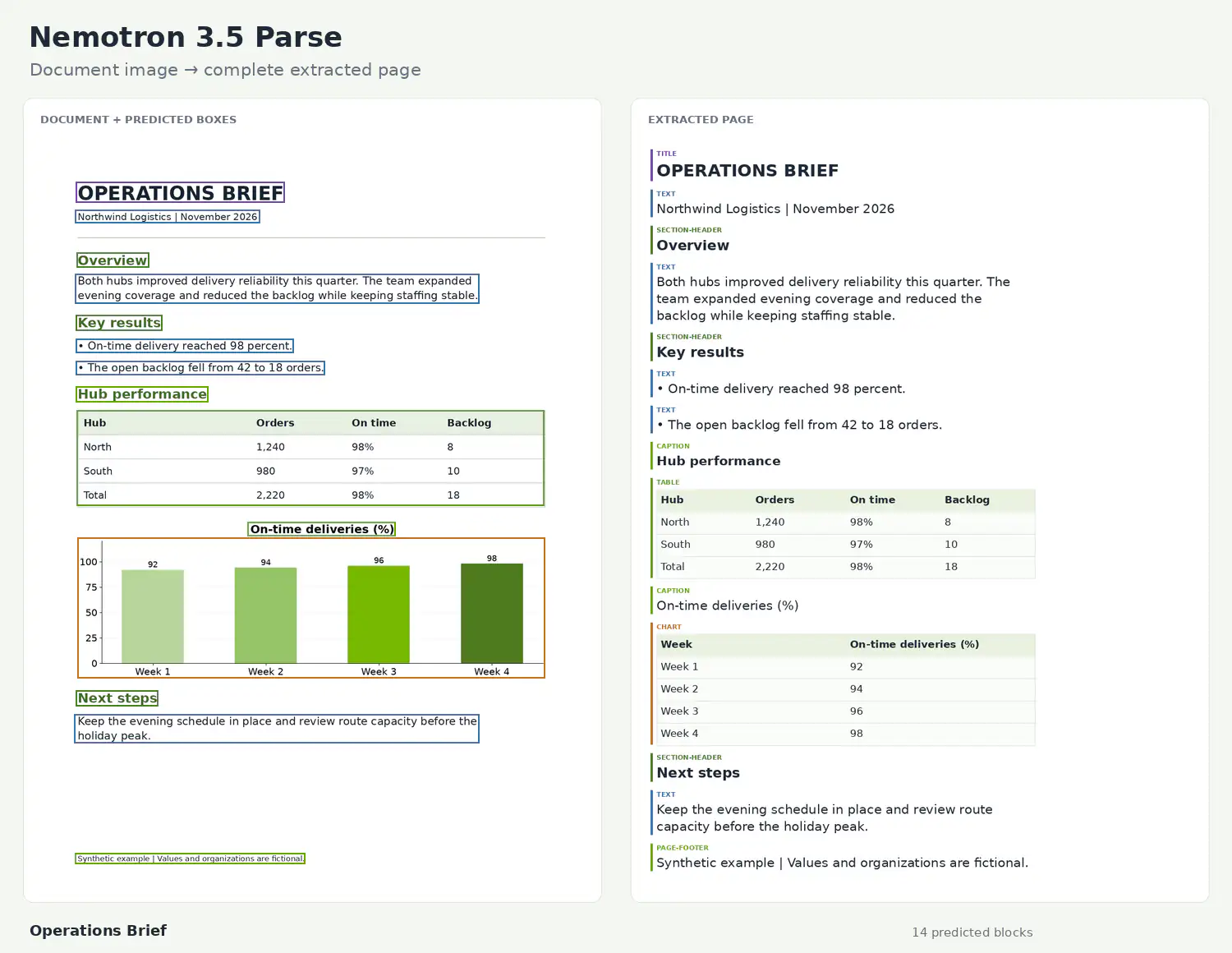
Parse reads a page the way a person does. It finds each heading and paragraph, and each table and chart. It puts them in reading order and marks where each one sits on the page. Tables and charts come out as structured records that other systems can search or analyze.
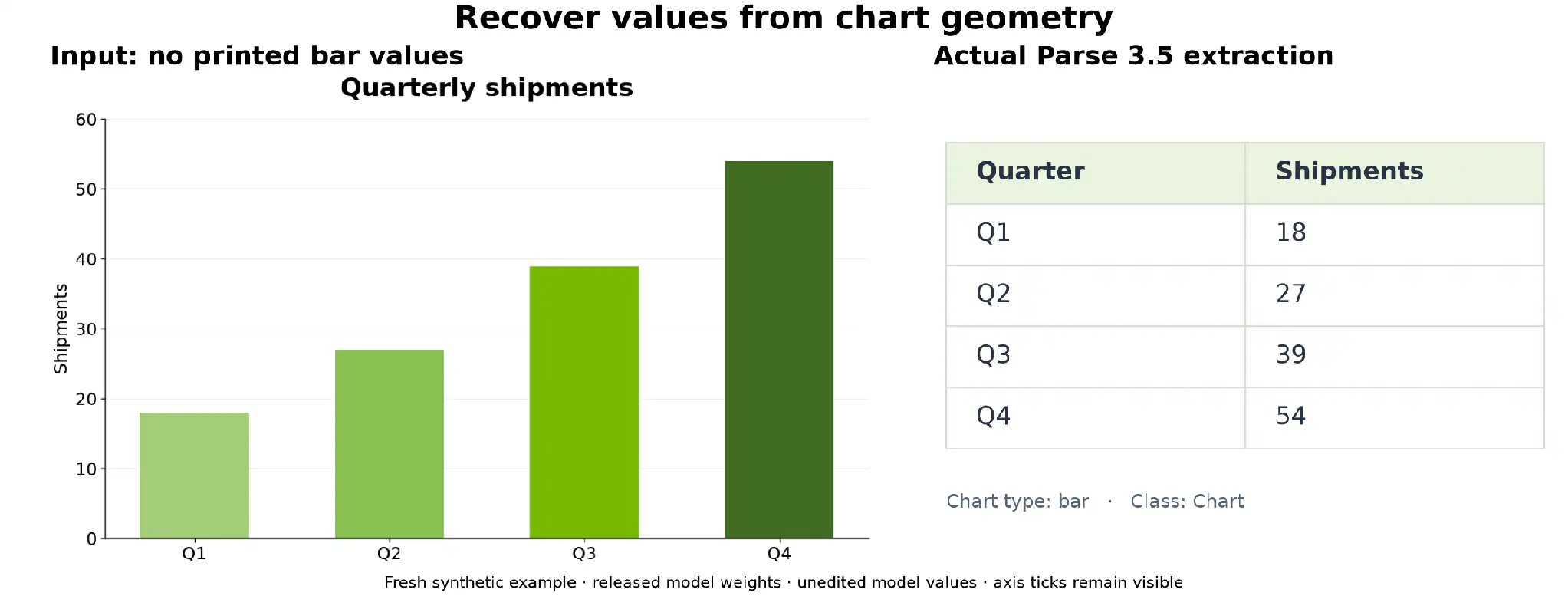
The new version is much better at hard cases. It can read a bar chart with no numbers printed on it, by measuring the bars against the axis. It also keeps rows and columns straight in tricky tables.
Nvidia is now sharing the material it trained on. There are three sets of made-up practice pages. The largest holds about 9.98 million charts. Another holds 1 million tables. The third has 7.9 million text pages in many languages. Each comes with the right answers attached. Developers can use them to make new practice pages for their own document type or language. Nvidia also published a training recipe that walks developers through each step.
What is actually new
The recipe is the useful part for a company. Every business has its own forms: claim forms, delivery notes, lab reports. A general model often reads the text but misses what the form means.
Nvidia's example is a dental chart. It shows each tooth and the treatment planned for it. Before training, the model read the tooth numbers but missed the treatment table. It got the task wrong every time. After two rounds of training, it was right 96.58% of the time.
Training also fixed a common fault. Document AIs sometimes get stuck repeating the same text. In a controlled test, pages flagged for this fell from 126 to 29, about 77% fewer.
Nvidia also describes a slower, more careful way to read hard pages. The model reads the whole page first. Then it crops dense tables and small chart details and reads them again at higher detail. That takes longer but scores better.
Speed improved too. With Nvidia's add-on, the model reads 20.44 pages a second on a single high-end chip. The previous version managed 2.98, so the new one is 6.86 times faster.
What it means for companies in Indonesia
Banks and insurers still run on paper and PDFs. So do hospitals and logistics firms. Before AI can answer questions about those files, something has to read them accurately. A misread table means wrong answers later, however good the chatbot on top is.
With a model you can train on your own forms, you set the pace. You no longer need to wait for a vendor to support your claim form or your customs paperwork. Your team, or a partner, can teach the model directly.
Check language support carefully. The multilingual practice set helps. Still, test the model on Indonesian documents before you rely on it. Stamps and handwriting are common trouble spots.
What to do
- Pick one form type that staff still retype by hand. Count how many arrive each month.
- Test the model on a sample of real pages. Check the tables and figures, since those break first.
- If it struggles, ask your data team whether the recipe could adapt it.
- Keep a person checking results until the error rate is known and acceptable.