
Google Search now links to a wider range of sites in its AI answers
Google put its new Gemini 4 Hydrogen model into Search for everyone. It handles long, messy questions, answers with more tables and images, and looks up more websites for each one.
The short version
- On 12 November Google put Gemini 4 Hydrogen, its newest fast AI model, into Google Search for all users worldwide. Google calls it the biggest model upgrade to Search yet.
- Search now splits a question into its parts and looks each one up at the same time. Google says this links people to a broader range of websites.
- Answers carry more images and comparison tables. They work in every language that Google's AI Mode supports.
What changed in Search
People can now type a question the way they think it. It can have several parts, typos or very specific needs. Google says Search will follow each part and answer it.
Behind this is a method Google calls query fan-out. Search breaks one question into related smaller questions and runs them all at once. Google says the answer then points to sites people might not have found before.
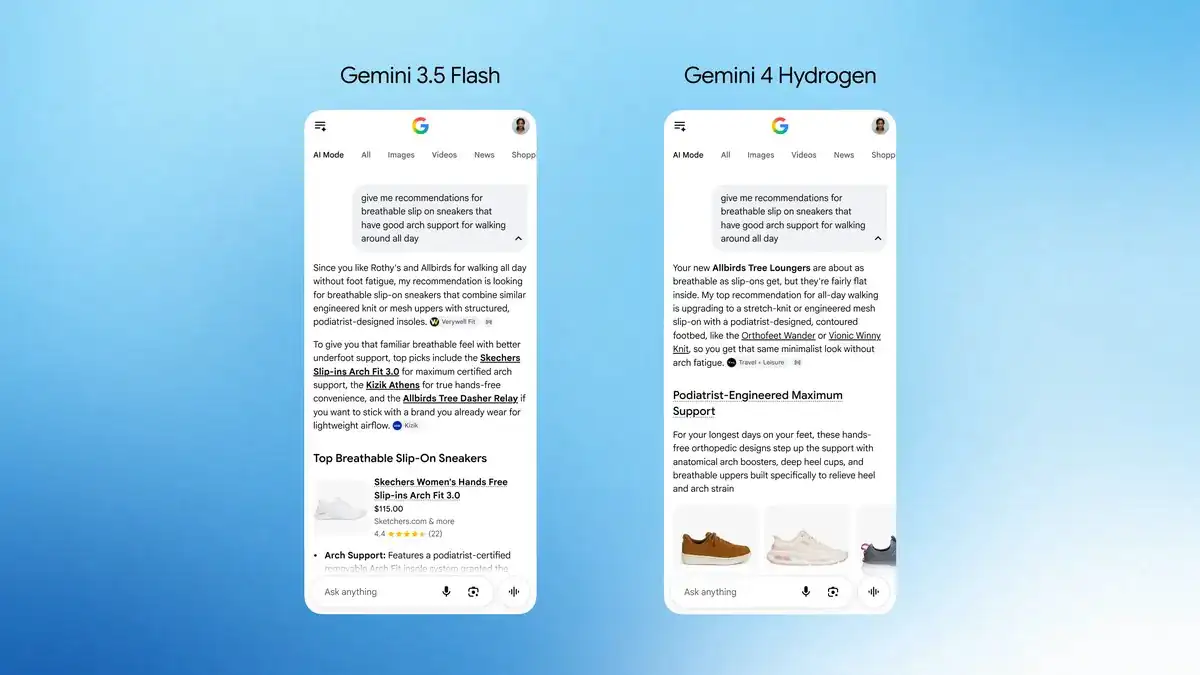
The answers look different too. Expect more pictures and side-by-side tables that are quick to scan. Google says they arrive at the speed people expect from Search.
The same model now runs the Gemini app. Google says it follows instructions more closely and picks the right tools more often. In Search, that should mean fewer answers that miss part of the question.
What is new for brands
Google says the upgrade connects people to a broader range of helpful links than before. For a brand, that could mean being found for questions where you never showed up.
The shape of questions also changes. Picture a shopper asking for running shoes for flat feet, under a set budget, that can arrive by Friday. Each part of that question becomes its own search. A product page that answers one part well may be picked for that part.
The answers are more visual as well. Tables pull details side by side, such as price and size. Product facts set out plainly on your site are easier to place in a table like that.
What Google has not said
Google gave no figures on how many more sites appear, or how often. It did not say how it picks the extra sites. It also said nothing about how ads sit inside these new answers.
How much it changes things for any one brand is unknown. The only way to know is to watch your own traffic.
What it means in Indonesia
Google says the upgrade is live for all users globally, in every language its AI Mode supports. Google's post does not list those languages. Wherever AI Mode works in Indonesian, local shoppers are seeing these answers now.
For marketing teams, this adds weight to a shift already under way. Being the page an AI answer picks now matters as much as ranking first in a list of links. Pages written for one broad keyword may lose ground to pages that answer one exact need.
A practical test is easy to run. Type three or four of your customers' real questions into Search, in the words they would use. Note which sites the answer links to, and whether yours is one of them.
What to do
- Write down the long, multi-part questions your customers really ask, and check what Search answers today.
- Make sure each product page states its price and delivery terms in plain text that can be lifted into a table.
- Give each specific customer need its own clear page or section.
- Track visits from Google Search over the coming weeks to see whether new pages start drawing traffic.