
Telkom plans to sell Indonesian-made AI built on research from BRIN
Telkom and BRIN, Indonesia's national research agency, signed an intent to collaborate on 24 November. The first goals are AI models that work in Indonesian, satellite ground services and stronger protection for digital signatures.
The short version
- BRIN, Indonesia's national research agency, signed an intent to collaborate with Telkom in Jakarta on 24 November.
- BRIN brings its research and its scientists. Telkom will turn the results into products and sell them, including through its satellite arm, Telkomsat.
- The first three projects are AI models that work in Indonesian, a satellite ground station service and new protection for digital signatures.
What was signed
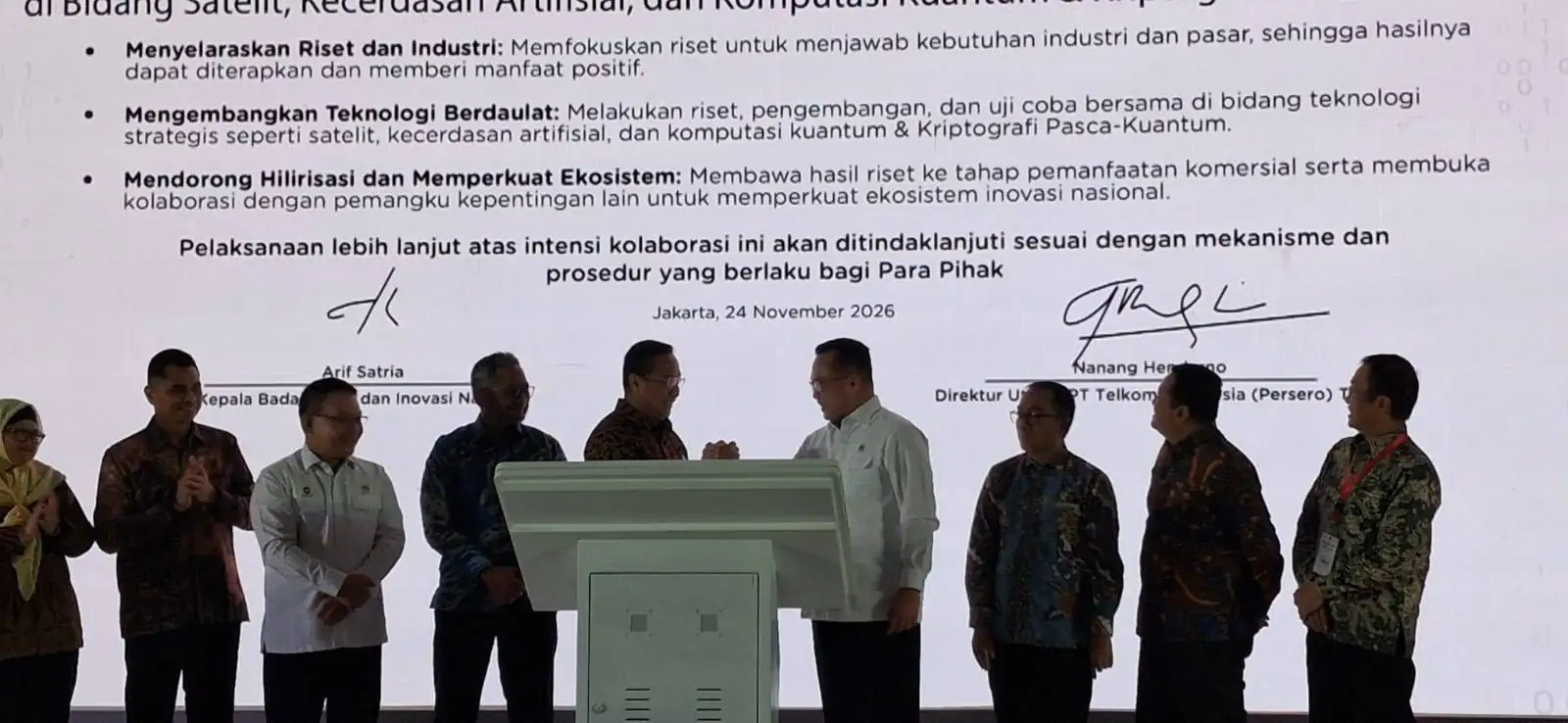
The agreement was signed by Arif Satria, who heads BRIN. Telkom's president director Nanang Hendarno signed for Telkom. Its stated aim is to strengthen Indonesia's digital sovereignty: the ability to build key technology at home, as well as buy it.
The two call their approach "joint innovation to commercialization". BRIN's research will be aimed at market needs from the start. Telkom will then test it with customers and turn it into products to sell.
The agreement covers three areas. The first area is AI. The plan includes large and small AI models that work in Indonesian, offered through Telkom's ModelHub platform. It also names four priority projects with Danantara Indonesia and MIND ID. Pertamina and Garuda Indonesia are partners in those projects too. A further goal is AI built on BRIN's own science, in fields such as health and farming.
In satellites, they will offer satellite imagery services and develop portable, affordable terminals for satellite links. Over the longer term, they aim to build a national network of low-orbit satellites, for uses such as positioning and navigation.
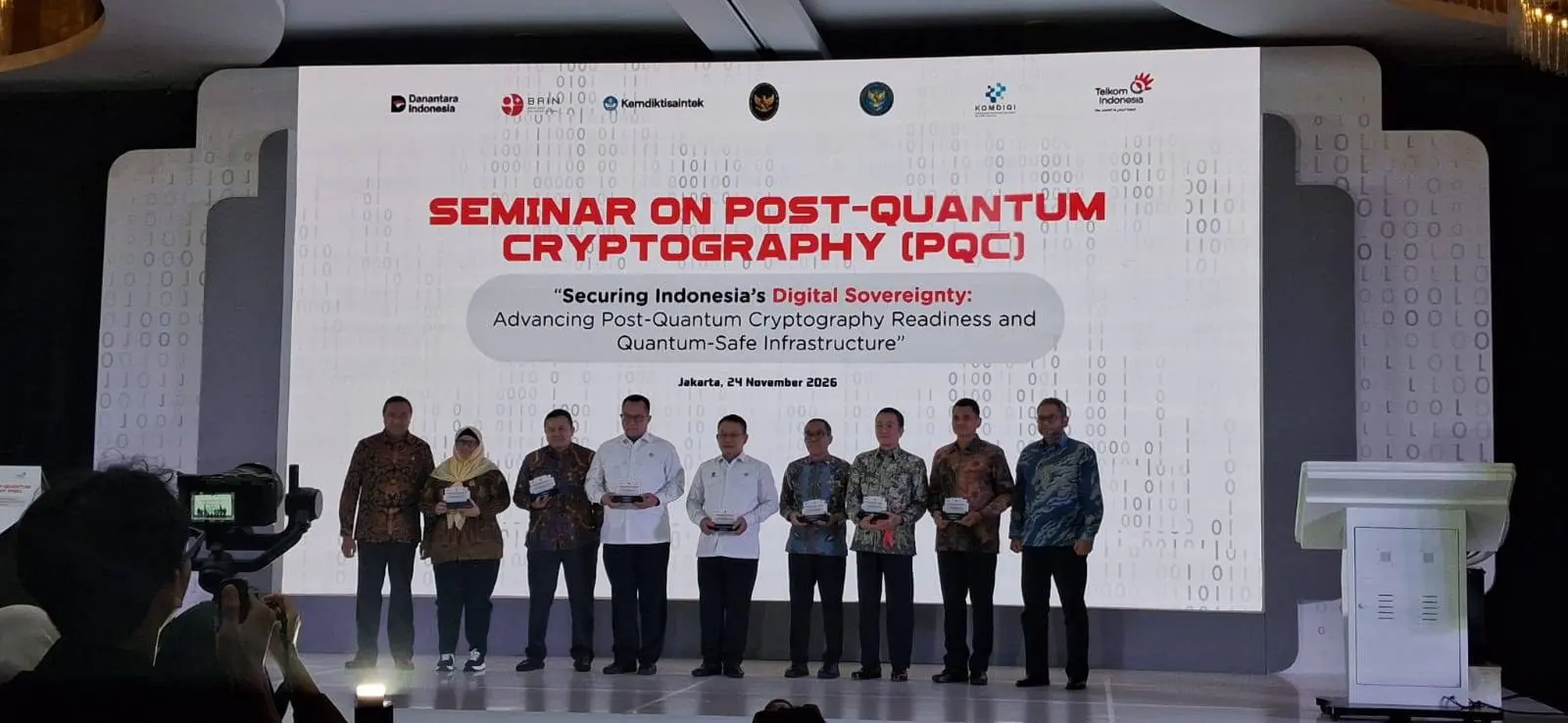
The third area is a new kind of encryption, called post-quantum cryptography. It is meant to stay secure even against future quantum computers. They will develop it for digital signatures and connected devices.
What is actually new
Telkom already offers AI and cloud services. What is new is a direct line from Indonesia's main public research agency to a company that can sell what it builds.
Nanang made the case plainly. Buying technology is not enough, he said. Indonesia also needs to be able to develop its own. Arif said Telkom gives BRIN's research a way to be tested by real users and markets.
This is still only an intent to collaborate. BRIN's announcement gives no budget or dates. Each side will contribute what its role allows, and other partners can join. Telkomsat will lead the satellite work on Telkom's side. The early targets are the first three projects listed above.
What it means for companies in Indonesia
For banks and state-owned companies, home-grown AI can answer two questions at once. Where is my data processed? And does the model understand Indonesian well? AI models trained for Indonesian, sold by a local provider, may become an option alongside global ones. A local option could also make it easier to keep data inside Indonesia.
If your company signs contracts or approvals electronically, watch the digital signature work. Experts expect future quantum computers to break some of today's encryption. Switching takes years, so planning starts early. Firms that keep signed records for many years should pay the closest attention.
What to do
- If you use AI with sensitive data, ask Telkom what its Indonesian models will offer and where they will run.
- Compare any local model with global ones on your own Indonesian documents before switching.
- List the systems where your company relies on digital signatures, and ask your providers about their plans for quantum-safe protection.
- If your industry is one of the priority fields, follow those projects for tools you could use.
- Treat this as a start. Wait for the first products and prices before you plan around them.